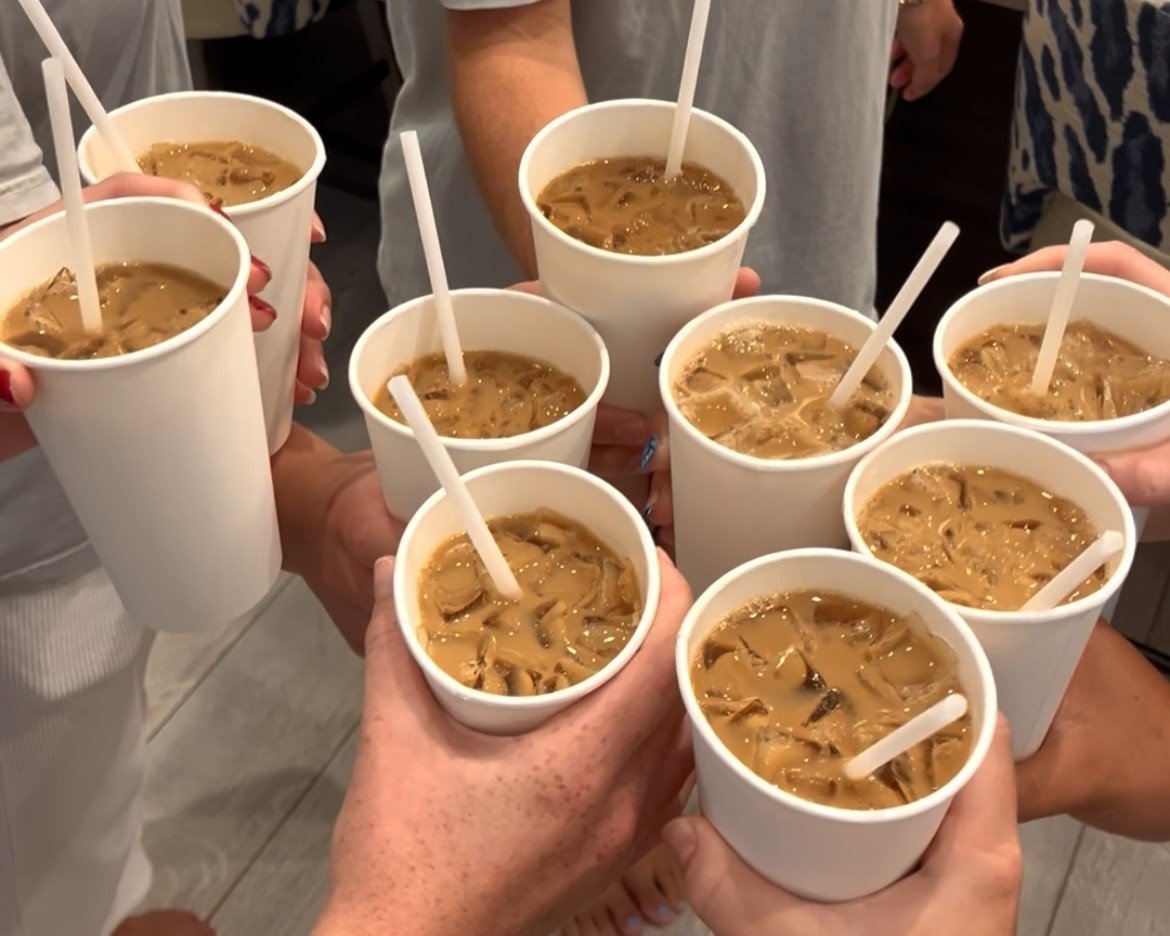
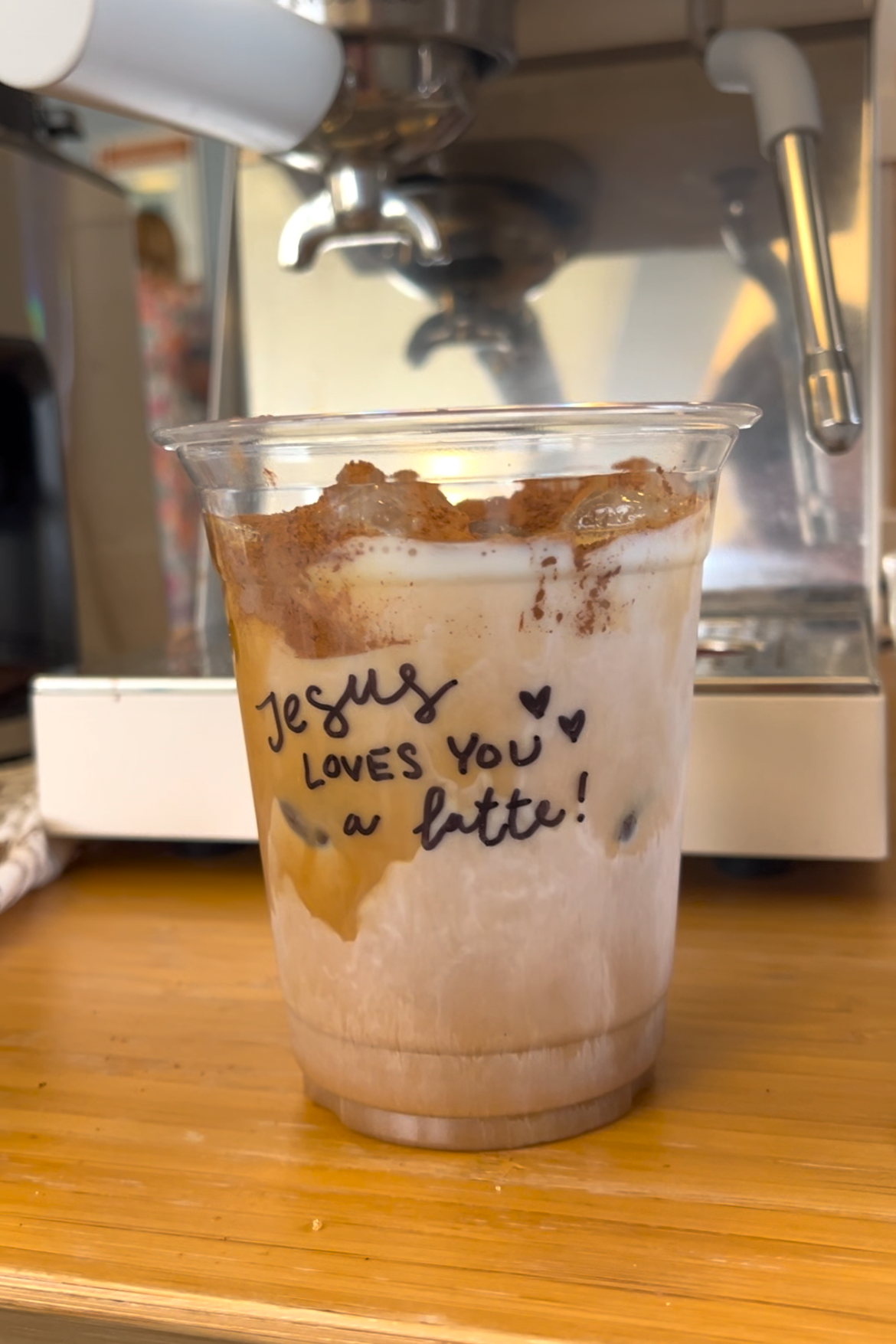
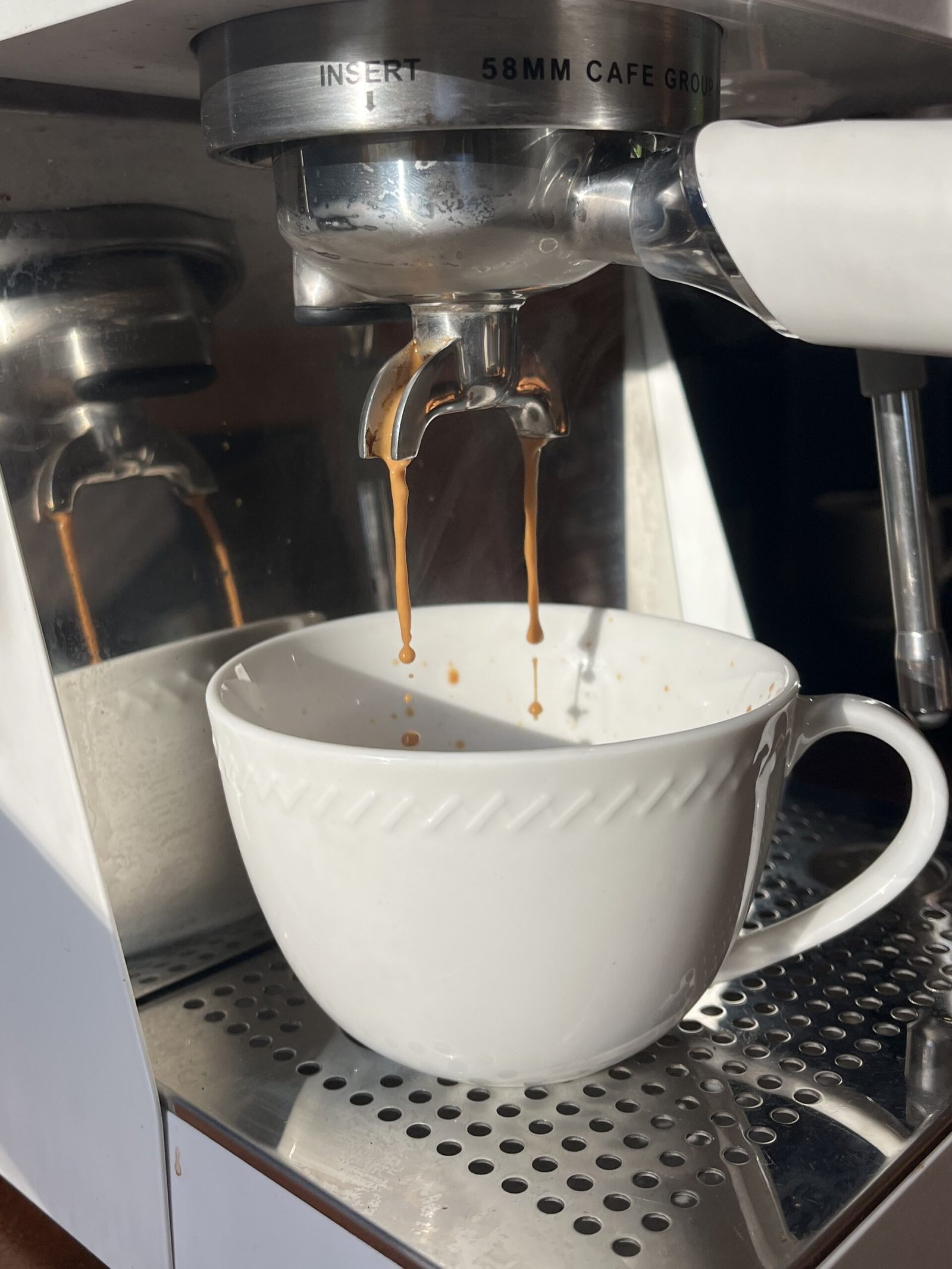
According to a new statement from the American Heart Association, up to 400mg of caffeine a day, so roughly three to five 8-ounce cups, is safe for most healthy adults and might even be good for your heart.
The catch: that benefit starts to disappear if you’re loading your cup with sugar, syrup, and heavy cream. And caffeine hits everyone differently depending on things like medication, sleep, and how fast your body processes it.
Honestly, I love when studies like this come out. I’m not a “more coffee is always better” person, I actually try pretty hard to limit myself. Caffeine affects me a lot, especially my sleep, so I keep myself to a max of two cups of coffee or four shots of espresso a day. No more, no matter how good the coffee shop smells.
So seeing “five cups” as the safe upper limit was honestly kind of funny to me, because I’m nowhere close to that and I don’t think I’d want to be. But it did make me appreciate my own limit a little more. Two cups a day means I get to actually enjoy my coffee instead of just running on it, and my sleep schedule says thank you.
If you’re someone who also pays attention to how caffeine affects you, here’s a gentle nudge: pay attention to your sleep, your energy crashes, and how you feel a few hours after your last cup. That’s usually a better guide for you personally than any general number a study gives, safe upper limits are still just averages across a lot of different people.
What’s your number? Are you a five-cups-and-thriving person or a two-cups-and-done kind of person like me?
There is a difference between a coffee shop that serves you and one that sees you. It does not show up in the menu or the décor. It shows up in the small, unscripted moments most people walk past without noticing. Here is what to watch for.
Are the workers enjoying serving you, or just going through the motions? You can tell the difference. One feels like a transaction. The other feels like a moment someone actually wanted to be part of.
Do they smile, or does it feel forced? A real smile changes the whole interaction. A forced one just reminds you that you are being processed.
Is the coffee made with visible care, not just speed? Care shows up in the pour, the attention to the cup, the small extra second someone takes even when the line is long.
If something is off with your order, do they feel comfortable telling you rather than hiding it? A shop that owns a mistake instead of quietly serving it anyway is a shop that respects you more than it fears you.
Do they drop what they are doing to help you, or do you feel like an interruption? The best shops make you feel like the reason they are there, not like a task on a list.
Do they remember regulars — your usual, your name, your face? Being remembered is one of the simplest ways to feel like you belong somewhere.
Does the space invite you to stay, rather than rushing you out? Seating that lets you linger, light that feels good to sit in, no pressure to free up the table.
How does the shop hold up when it is slammed? Does the warmth survive the rush? Anyone can be kind when it is quiet. The real test is whether that same warmth survives a full house.
Are there small, unprompted gestures — a free sample, a genuine goodbye? Nothing that was upsold or scripted. Just something offered because someone wanted to.
How do the staff treat each other, not just the customers? The way a team treats one another behind the counter is usually the truest read on whether the warmth up front is real.
A coffee shop is not just a place you buy something. At its best, it is a place you belong to.
The Coffee Collect is reader supported. When you purchase through links on our site, we may earn an affiliate commission—at no extra cost to you. Your support helps us continue sharing coffee inspiration, tips, and discoveries with this community. Thank you for being a part of our coffee journey!
There are two types of college students.
The ones who willingly spend $7 every morning on an iced latte before class…
…and the ones who realize they can make an even better one in their dorm room.
Hi! My name is Annaliese, and I’m both a college student and a barista of over 3 years who loves everything about coffee. Over the past few years, I’ve spent countless hours making espresso behind the bar, using home espresso machines, and building a coffee setup that fits inside a tiny dorm room.
One thing I’ve learned? You don’t need tons of space—or thousands of dollars—to enjoy incredible espresso at college.
If you’re moving into your freshman dorm, upgrading your apartment coffee bar, or finally tired of relying on dining hall coffee, this guide will help you find an espresso machine that fits your space, your budget, and your coffee goals.
Let’s find your perfect setup.
What Makes a Great Dorm Room Espresso Machine?
Dorm rooms come with unique challenges.
Counter space is limited. Storage is even more limited. And unless your roommate is also a coffee enthusiast, you’ll probably want something that’s easy to use and doesn’t take over the entire room.
When I’m recommending an espresso machine for college students, I look for a few things:
A compact footprint
Beginner-friendly operation
Easy cleanup
A removable water tank
Whether it comes with a grinder
Strong Amazon reviews
Reliability for everyday use
A price that makes sense for a college budget
If a machine checks all of those boxes, it’s worth considering.
And remember: a cheaper machine is not going to be the best-performing espresso machine out there. But it will do the job, and it will do it well enough 😉
Before You Buy: Check Your Dorm’s Appliance Policy
Every college has different rules.
Most schools allow coffee makers and dorm room espresso machines, but some have restrictions on appliance wattage or certain types of heating elements.
Before ordering a machine, take two minutes to check your residence hall handbook. It’s much better than discovering on move-in day that your dream coffee setup has to stay at home.
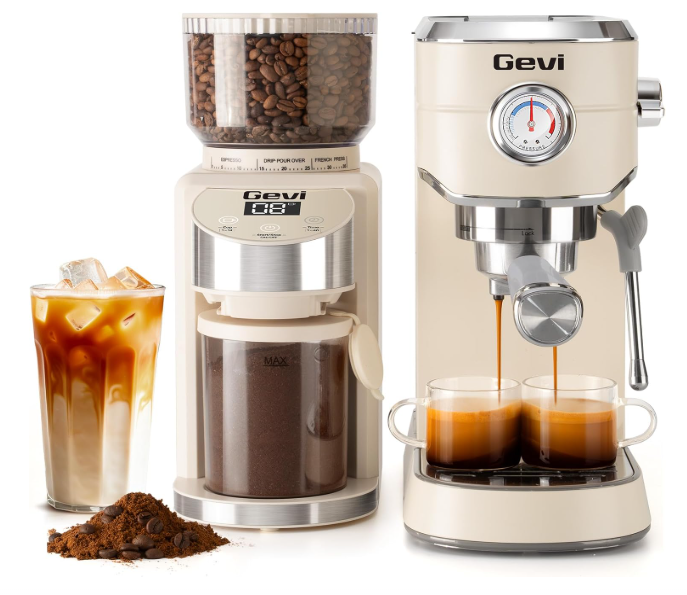
My Top Pick: Gevi 20 Bar Espresso Machine + Conical Burr Grinder
As a barista, this is the setup I would recommend first: Gevi 20 Bar Espresso Machine paired with its matching conical burr grinder.
As someone who works as a barista, I can honestly say that having a quality grinder makes just as much of a difference as having a quality espresso machine. The included grinder features 35 precise grind settings, which means you can actually dial in your espresso instead of settling for “good enough.”
A few reasons I think this setup would be great:
Compact enough for a dorm room or apartment
Beautiful, modern design that doesn’t look bulky
20-bar pressure for rich espresso
Powerful steam wand for homemade lattes and cappuccinos
Removable water tank for easy refilling
Conical burr grinder that improves overall espresso quality
Easy enough for beginners while still giving you room to grow as a home barista
One of my favorite things about this machine is that it doesn’t feel like something you’ll outgrow after graduation. It’s a machine you can genuinely enjoy throughout college and continue using long afterward.
If you’re serious about making café-quality coffee at home, this would absolutely be my first recommendation.
The atatix Espresso Machine is the first espresso machine I had in my dorm room. I loved how small it was and how easy it was to use. It also comes in a few different colors so you can match the aesthetic of your dorm room!
At just 5 inches wide, it is the slimmest machine on this list.
Not everyone is ready to invest in a premium espresso setup—and that’s okay.
If your budget is closer to $100, there are several excellent beginner machines that can still make enjoyable espresso while helping you learn the basics.
Here’s a few I’d recommend:
CASABREWS 3700 Espresso Machine: Last I checked, this one was only $99.99 which is perfect for a college student’s budget! It’s compact, stylish, and would work perfectly in a dorm room setting! It also comes in black, cream, sapphire blue, and pastel green! Click HERE to check it out!
XIXUBX Compact Espresso Machine: This one is stylish, small, and comes in a few different colors! Some reviewers say it runs relatively quiet, which is awesome for a dorm room. Click HEREto shop!
CHULUX Slim Espresso Machine: Super beginner-friendly and easy to use. It comes in lots of colors and looks great on a counter without taking up much space. Click HERE to check it out!
AMZCHEF Compact Espresso Machine: A more modern look, super easy to use, and it heats up quickly. It is highly rated by reviewers and the most affordable pick on this list! One heads-up: it is a little taller than the others, so measure your shelf first. Click HERE to shop!
Espresso Machines That Come with a Grinder
For many reasons, I think it’s very important to have a grinder and grind your coffee fresh. So, I thought I would include a few machines that conveniently have a built-in grinder on this list.
AMZCHEF Espresso Machine with Grinder: This one saves you the hassle of buying a separate grinder. It heats up quickly, has a relatively compact design, and has an intuitive touchscreen. ClickHEREto shop!
CUSIMAX Espresso Machine with Grinder: Compact for a machine with a built-in grinder. That grinder is key: it lets you grind your beans fresh, which gives you the best flavor. It is also very easy to use. (it has a 4.0-star rating from fewer reviews than most picks here, so read a few before you buy.) Click HERE to check it out!
Want to save a little more? You can pair one of the budget machines above with a good grinder for less than an all-in-one package.
Compare Them Side by Side
Prices and ratings checked October 20, 2026; they change often, so check the listing before you buy!
Machine
Price
Size (D × W × H, inches)
Amazon rating
Grinder
AMZCHEF Compact
$79.98
12.5 × 7 × 14.4
4.6 (371)
No
XIXUBX Compact
$89.99
11.4 × 6.7 × 11.8
4.4 (679)
No
CHULUX Slim
$95.98
11.7 × 5.5 × 12.5
4.4 (783)
No
CASABREWS 3700
$99.99
12.6 × 5.7 × 12.5
4.2 (3,749)
No
atatix
$103
12 × 5 × 11
4.2 (1,113)
No
CUSIMAX with Grinder
$165.99
11.6 × 9.5 × 14.1
4.0 (228)
Built in
AMZCHEF with Grinder
$179.99
11.2 × 9.1 × 14.2
4.4 (196)
Built in
Gevi + Grinder
$249.99
12.28 × 10.31 × 12.4
4.4 (1,903)
Bundled
Accessories That Make Your Dorm Coffee Bar Even Better
The espresso machine is only part of the equation.
A few small accessories can completely transform your daily coffee routine.
Handheld frother for mixing and making yummy cold foams! I’ll link my favorite one HERE
These aren’t all necessities, but they’ve definitely made my own dorm coffee setup feel more like a tiny official café 😉
Is an Espresso Machine Worth It in College?
Yes. Absolutely. 100%. Sí. Always.
(for me at least haha)
Let’s say you buy a latte before class four times each week.
At around $7 per drink, that’s roughly $28 every week.
Over a 15-week semester, that’s about $420.
By the end of the school year, you’ve likely spent well over $800 on coffee alone.
While buying an espresso machine is definitely an investment, it can quickly become one of those purchases that saves you money over time—especially if you’re already someone who loves specialty coffee.
And honestly? Saving money isn’t even the best part.
There’s something really special about making your own latte just the way you like it before an early class or inviting friends over for coffee and study dates.
It’s safe to say that some of my favorite college memories have definitely happened around my dorm room coffee bar.
Don’t buy the biggest espresso machine you can find or the most expensive one.
Buy the one you’ll actually enjoy using every day.
Your dorm room doesn’t need to look like a commercial café.
Start with a quality machine, a grinder, fresh coffee beans, and a willingness to learn.
You’ll improve with every shot you pull <3
Do I need a grinder?
(A frequently asked question)
It’s not necessary however I definitely recommend you do haha—a burr grinder is one of the best investments you can make. Freshly ground coffee makes a noticeable difference in espresso quality.
Here’s a few good burr grinders I’d recommend for a college dorm room:
Geimori T38: Its little, its quiet, its battery powered, its portable… yeah, this one is great for a dorm room. Click HERE to check it out.
AAOBOSI Cordless Burr Coffee Grinder: This one is slightly bigger than the one above, but it is cordless and customers seem to be very happy with its performance. Click HERE to check it out.
CEVING Mini Manual Coffee Grinder: This one is low cost with high-quality results. Perfect for a college student’s budget! Click HERE to check it out.
Come Hang Out with Me on Instagram!
If you’re anything like me, coffee is about so much more than caffeine.
It’s slow mornings before class.
Hosting friends in your dorm.
Trying new recipes.
Learning new skills.
And creating little moments that make college feel a bit more like home.
If you’d like even more dorm coffee inspiration, homemade drink recipes, honest coffee gear reviews, and behind-the-scenes looks at my own college coffee setup, I’d love to have you join me over on Instagram at @the.coffee.collect.
That’s where I share my everyday coffee life as a college student, test new products, and hopefully inspire you to build a coffee setup you absolutely love.
I’d love to see you there!
Final Thoughts
Finding the right dorm room espresso machine isn’t about buying the most expensive setup—it’s about finding one that fits your lifestyle.
As both a college student and a barista, I know firsthand that great coffee doesn’t have to come from a coffee shop. With the right machine, and a little practice you can create drinks you’ll genuinely look forward to every single morning.
I hope this guide helps you find a machine that makes your college mornings just a little bit better <3
The Coffee Collect is reader supported. When you purchase through links on our site, I may earn an affiliate commission—at no extra cost to you. Your support helps me continue sharing coffee inspiration, tips, and discoveries with this community. Thank you for being a part of my coffee journey!
If you’ve been dreaming about creating your own dorm room coffee bar but aren’t sure where to start, you’re in the right place.
Hi! I’m Annaliese, a college student, coffee enthusiast, and barista with over three years of experience. Throughout college, I’ve built a coffee setup that fits in a dorm room without sacrificing the quality of the drinks I love. If you want to see my coffee setup in real life, you can follow along on my Instagram HERE. I also do little pop-up coffee shops in my dorm hall on campus!
If you’re tired of spending $8 on a latte before class, looking for a cozy study companion, or simply want to make your dorm feel a little more like home, creating a coffee bar is one of the best investments you can make during college.
This guide combines my experience as both a barista and a college student to walk you through everything you need—from choosing the right espresso machine and grinder to organizing your space and stocking your favorite flavors and accessories. I’ll also share a few tips I’ve learned from living with a coffee bar in a small dorm room, so you can avoid common mistakes and make the most of your setup!
Let’s build the dorm room coffee bar of your dreams—without breaking the bank (woohooo!)
Before You Buy Anything
Before you start shopping, take a few minutes to check your residence hall’s policies.
Some dorms have restrictions on certain appliances or maximum wattage limits. Others may require that appliances have an automatic shut-off feature. Every school is different, so it’s always worth checking your housing handbook before making any purchases.
You’ll also want to think about how much space you actually have.
Ask yourself:
How much countertop space is available?
Will your roommate also use the coffee bar?
Do you have room for a rolling cart or shelving?
Will you mostly make hot drinks, iced drinks, or both?
Do you have access to a fridge?
Planning ahead will help you choose equipment that fits both your space and your lifestyle.
Money-Saving Practices for Your Coffee Bar
A dorm coffee bar can absolutely be budget-friendly if you build it with intention.
One of the best ways to save money is to start small. You do not need to buy every accessory, syrup, and gadget all at once. Begin with the essentials and add to your setup over time as you figure out what you actually use.
Here are a few practices that can help keep costs down:
Buy used when possible. Espresso machines, carts, mugs, and organizers can often be found secondhand for much less than retail price (here’s your excuse to go thrifting or to shop on Facebook marketplace 😉 ).
Stick to a few syrups or flavorings you know you’ll use. It’s easy to get carried away with trendy flavors, but a small collection goes a looooong way. (Honey, Brown Sugar, Maple Syrup, Vanilla, Caramel, and Mocha are your best friends)
Use reusable cups and glasses (these can be thrifted too!). This cuts down on waste and saves money over time.
Share supplies with your roommate or friends if it makes sense. Things like sweeteners and coffee beans can be split to lower the cost.
Watch for student discounts, seasonal sales, and bundle deals. Coffee gear often goes on sale around holidays or back-to-school season.
Take advantage of your meal plan (if you are on one). Instead of buying milk, I filled up a small jug of milk at my dining hall every now and then and used that for my coffees.
The goal is to create a setup that feels enjoyable without turning into a financial burden 😉
Choosing the Right Coffee Maker
Your coffee maker is the centerpiece of your coffee bar, so it’s worth spending a little time deciding what fits your needs.
If you love lattes, cappuccinos, and other espresso-based drinks, an espresso machine is probably the best choice. I created a list of budget friendly dorm room espresso machines. Click HERE for the list.
If you like to keep things convenient and simple with drip coffee, the Mr. Coffee Mini Brew might make more sense.
There’s no single “right” choice. The best coffee maker is the one that fits your budget, your available space, and the types of drinks you enjoy most.
One of the biggest upgrades you can make to your coffee is grinding your beans fresh.
Whole beans stay fresh much longer than pre-ground coffee, and freshly ground coffee preserves more of the aromas and flavors that make each cup taste great.
If you’re purchasing a grinder, aburr grinder is truly worth the investment because it produces a much more consistent grind size.
I personally have two burr grinders and both are great for different purposes. They are…
The Geimori T38: I love this grinder because it’s high quality, extremely small, portable, and battery powered. It’s a single-dose grinder that allows me to have more control over my grind size and espresso quality. Check it out HERE.
The Homtone Burr Grinder: This one is perfect for when I’m in a rush or want to make multiple coffees in a row. It’s bigger than the Geimori T38 and requires an outlet, but it performs splendidly. Check it out HERE.
If a grinder isn’t in your budget yet, don’t worry. You can absolutely start with pre-ground coffee and upgrade later. Building your coffee bar is a process, not a race.
Stock Your Coffee Bar
Once you’ve picked out your brewing equipment, it’s time for the fun part.
Start with the basics:
Coffee beans–get whole coffee beans if you have a grinder, or get pre-ground espresso coffee if you don’t have a grinder. Try Knights Coffee and use my discount code THECOFFEECOLLECT for 10% off your entire order! 🙂
Milk of choice
Flavors–no need to buy all the fancy syrups if it’s not in your budget. Honey, brown sugar, and maple syrup are all low cost yet highly delicious!
Coffee mugs or iced coffee glasses (especially ones that you can take on-the-go!)
You don’t need dozens of syrups or every trending accessory right away. Start with the drinks you know you’ll actually make, then slowly build your collection over time.
Organizing Your Dorm Coffee Bar
Dorm rooms are small, but with a little creativity, you can build a coffee bar that’s both functional and aesthetically pleasing.
Use vertical space whenever possible. Small shelving units, risers, and rolling carts can dramatically increase your storage without taking up much additional floor space. I used a dresser for my coffee bar in my dorm room, but something like this 5 Tier Coffee Bar Station would also be just perfect.
One of the most important things is to make sure you have a power strip. Outlets can sometimes be scarce in dorms. The power strip I use is linked HERE.
A clean, organized coffee bar not only looks better but also makes your morning routine much smoother.
My Dorm Coffee Bar Setup
If you’re curious about the products I personally use every day, I’ll link a complete list of what I use for my dorm room coffee bar.
These are the products I’ve chosen after years of experimenting with different setups, and they’ve served me extremely well throughout college.
Once your coffee bar is complete, try experimenting with a few café favorites. Here are some of my favorites that require inexpensive flavorings.
Vanilla Latte
Teddy Graham Latte: Brown Sugar, Honey, Cinnamon Powder
Brown Sugar Shaken Espresso
Maple, Brown Sugar, Cinnamon Powder
Blondie: Caramel, Vanilla, White Chocolate
Make sure to check out @the.coffee.collect on Instagram for many more dorm room recipes!
Tips & Tricks for the Dorm Room Barista
Coffee creates community! Find some other coffee-lovers and invite them over for coffee! This is my favorite part. Hands down.
Don’t pour coffee grinds down the drain after you’ve used them. Plumbing isn’t the greatest in dorm rooms. Used coffee grinds go in the garbage.
Take care of your equipment!! Please! Make sure to do a simple cleanup at least once a week and then perform a deep clean at least once a month.
Be patient! Sometimes it takes a while to figure out the whole “home barista” thing. Make sure to experiment and make small adjustments until you find your perfect coffee.
Set clear boundaries with your roommates to avoid conflict from the start. Can they use your coffee bar? Will they be expected to help cover the cost of things like beans, milk, and flavors? How should they clean it after they use it?
Some espresso machines and grinders make a little noise. Will you be brewing coffee in the same area your roomates will be sleeping?
Final Things…
Creating a dorm room coffee bar doesn’t mean buying the most expensive espresso machine or filling your shelves with every coffee gadget you can find.
Start with what fits your budget, make upgrades over time (if needed), and build a setup that works for your lifestyle.
College goes by quickly, and sometimes it’s the small routines—like making your favorite latte before an early class or inviting friends over for coffee—that become the memories you cherish most <3
I hope this guide helps you create a coffee bar you’ll love throughout your college years. And if you do build one, I’d absolutely love to see it!!! Tag me on Instagram so I can cheer you on and see your setup.
Please don’t hesitate to reach out to me if you need any more help or guidance!
Learn how mushroom coffee can boost focus, energy, and wellness while enjoying delicious coffee at home.
The Coffee Collect is reader supported. When you purchase through links on our site, we may earn an affiliate commission—at no extra cost to you. Your support helps us continue sharing coffee inspiration, tips, and discoveries with this community. Thank you for being a part of our coffee journey!
Mushroom coffee has quietly made its way from wellness circles into everyday coffee routines—and honestly, I get the appeal. As coffee lovers, many of us want the ritual, the flavor, and the comfort of coffee without the jitters, crashes, or upset stomach that can sometimes come along with it.
If you’ve been curious about mushroom coffee but aren’t sure what it actually is (or how to make it taste good), this guide breaks it all down. We’ll cover what mushroom coffee is, potential health benefits, how it tastes, and easy ways to make mushroom coffee at home.
What Is Mushroom Coffee?
Mushroom coffee is a blend of traditional coffee and powdered functional mushrooms. These mushrooms are dried and extracted to concentrate their beneficial compounds, then mixed into coffee grounds or instant coffee.
Despite the name, mushroom coffee does not taste like mushrooms. Most blends taste very similar to regular coffee—often smoother, less acidic, and slightly earthy.
Common mushrooms found in mushroom coffee include:
Cordyceps – often used for energy and endurance
Lion’s Mane – commonly used for focus and cognitive support
Chaga – rich in antioxidants and often associated with immune support
Reishi – known as a calming adaptogen, linked to stress support
Before diving in, it’s worth noting that these benefits are based on general wellness use and traditional applications of functional mushrooms—not medical claims.
While everyone’s experience is different, many people drink mushroom coffee for its functional benefits when paired with a balanced lifestyle.
1. Balanced, Jitter-Free Energy
Most mushroom coffee blends contain less caffeine than regular coffee, which may help reduce jitters, anxiety, and energy crashes.
2. Focus and Mental Clarity
Lion’s Mane mushroom is especially popular for its potential cognitive benefits, making mushroom coffee a favorite among students, creatives, and remote workers.
3. Stress and Immune Support
Adaptogenic mushrooms like Reishi may help the body better manage stress, while Chaga is known for its antioxidant content.
4. Easier on Digestion
Many people find mushroom coffee gentler on the stomach and lower in acidity than traditional coffee.
Important note: Mushroom coffee is not a medical treatment. Always consult a healthcare professional if you have health concerns or are taking medications.
What Does Mushroom Coffee Taste Like?
Does mushroom coffee taste like coffee? This is usually the biggest hesitation—and the answer is reassuring.
Mushroom coffee tastes very similar to regular coffee. Some blends are even smoother and less bitter.
Once you add milk, creamer, or sweetener, the mushroom flavor is practically undetectable. If you enjoy lattes or flavored coffee drinks, mushroom coffee is an easy swap.
Also, the coffee community speaks for themselves! I looked at the customer reviews of many popular mushroom coffee blends on Amazon–and most people seem to love the taste.
Here are some highly rated mushroom coffee blends on Amazon:
HabitONE Instant Mushroom Coffee: Instant coffee with Lion’s Mane, Cordyceps, Reishi, and Chaga. Quick and convenient. Use code HABITONE2026 for a special 10% discount! (affiliate link)
You don’t need special equipment to make mushroom coffee.
Mushroom coffee comes in two ways: ground coffee or instant coffee and you simply brew it as if you were brewing any other regular coffee blend.
For some, the fact that there isn’t “whole bean” mushroom coffee out there might be a downside because you can’t grind your coffee beans fresh. But a solution to that would be grinding your coffee beans fresh and adding a mushroom powder to your fresh grounds before you brew. That way you still get the freshness and the mushroom benefits.
If you’re wary about buying pre-made mushroom coffee, starting with mushroom powder is my recommended approach. This lets you control the mushroom-to-coffee ratio based on your personal taste preferences and how your body responds, while still enjoying your favorite coffee beans.
Mushroom coffee isn’t about replacing coffee—it’s about reimagining it. It keeps the ritual we love while offering a smoother, more balanced experience.
Whether you choose a ready-made mushroom coffee blend or add mushroom powder to your favorite beans, it’s an easy way to explore functional coffee at home.
If you’re curious, start simple and listen to your body.
I’d love to hear your thoughts on mushroom coffee once you’ve tried it!
The Art of Coffee Roasting: Light vs. Medium vs. Dark
The Coffee Collect is reader supported. When you purchase through links on our site, we may earn an affiliate commission—at no extra cost to you. Your support helps us continue sharing coffee inspiration, tips, and discoveries with this community. Thank you for being a part of our coffee journey!
Coffee roasting is where science meets artistry. It’s the transformative moment when green coffee beans are turned into the aromatic, complex beans we know and love. Understanding roast levels helps you choose coffee that fits your taste, brewing method, and even the mood you’re in.
In this guide, we’re breaking down light vs. medium vs. dark coffee roasts, what makes each unique, and how to decide which one belongs in your cup.
What is Coffee Roasting?
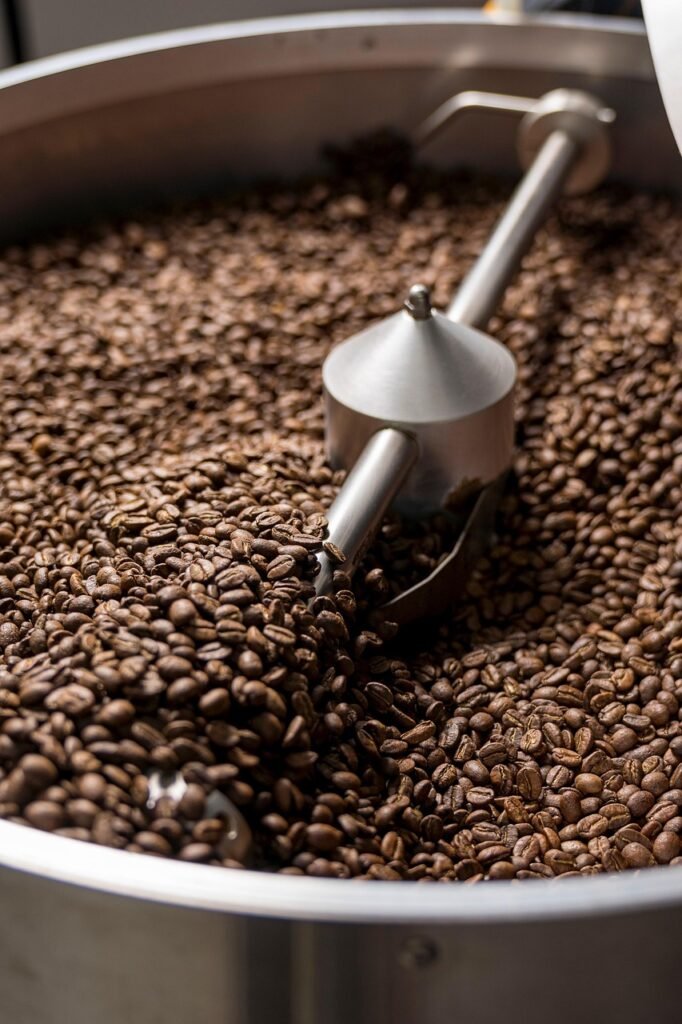
Coffee roasting is the process of applying heat to green coffee beans to unlock their flavors, aromas, and textures. As beans roast, they go through chemical changes—like the Maillard reaction and caramelization—that create hundreds of flavor compounds.
What’s Maillard reaction?
The Maillard reaction is a complex series of chemical reactions between amino acids (from proteins) and natural sugars that occurs when coffee beans are exposed to heat during roasting. It begins once the beans reach higher temperatures and continues through much of the roasting process.
This reaction is largely responsible for the browning of the beans and the development of many of coffee’s most recognizable flavors and aromas—such as caramel, toasted bread, nuts, cocoa, and savory notes. Unlike simple caramelization (which involves sugars alone), the Maillard reaction creates hundreds of new flavor and aroma compounds, adding depth and complexity to the cup.
The extent of the Maillard reaction varies by roast level.
In light roasts, it’s just beginning, allowing brighter, origin-specific flavors to shine.
In medium roasts, it’s more developed, creating balance and sweetness.
In dark roasts, it dominates the flavor profile, contributing to bold, smoky characteristics.
In many ways, the Maillard reaction is where the art of roasting truly lives—small changes in time and temperature can dramatically shape how a coffee tastes in the final cup.
Roast level is determined primarily by time and temperature, not by the type of bean itself.
Contrary to popular belief, dark roasts do not necessarily have more caffeine, and light roasts aren’t “weaker”—they’re just different.
Light roasts are roasted for the shortest amount of time, typically stopped shortly after the “first crack” (when beans expand and crack audibly).
Flavor Profile:
Bright acidity
Fruity, floral, or citrus notes
Pronounced origin characteristics
Body & Appearance:
Light brown color
No surface oils (dryer appearance)
Lighter body
Best For:
Pour-over
Drip coffee
Tasting single-origin beans
Light roasts highlight the natural character of the coffee bean and the region it comes from. If you love nuanced flavors and enjoy coffee tasting like berries, stone fruit, or tea, light roast is a beautiful place to start.
Medium roasts strike a balance between origin flavor and roast development. They’re roasted longer than light roasts but stopped before oils rise to the surface.
Flavor Profile:
Balanced acidity
Notes of caramel, chocolate, and nuts
Smooth and approachable
Body & Appearance:
Medium brown color
Minimal oil
Medium body
Best For:
Drip coffee
French press
Espresso (especially when using for milk-based drinks)
Medium roasts are often the most crowd-pleasing. They offer depth without bitterness and are a great daily driver if you enjoy a well-rounded, comforting cup.
Dark roasts are roasted well past the second crack, resulting in bold, smoky flavors and visible oils on the bean surface.
Flavor Profile:
Low acidity
Bitter-sweet, smoky, or toasted notes
Flavors driven by the roast rather than origin
Body & Appearance:
Dark brown to nearly black
Shiny, oily surface
Full body
Best For:
Espresso
Moka pot
Cold brew
Dark roasts are rich and intense, often associated with traditional espresso and classic diner coffee. If you love boldness and a lingering finish, dark roast delivers that familiar, grounding experience.
It would be unfair if we did all this talk about roast-level without mentioning the work that goes into it.
Behind every roast is a roaster making thoughtful decisions in just minutes. They’re listening for cracks, watching color changes, adjusting heat, and thinking ahead—asking what flavors to highlight and how best to honor the bean’s origin.
Much of their work happens quietly and repeatedly: testing batches, tasting, adjusting by seconds or degrees, and responding to factors most people never notice, like humidity or bean density. Roasting isn’t about forcing flavor, but carefully revealing what’s already there.
When we understand this, roast levels become more than labels—they become the result of intention, patience, and craft.
Which Roast Level Is Right for You?
Choosing a roast level isn’t about right or wrong—it’s about preference and intention.
Love bright, complex flavors? Try light roast.
Want balance and versatility? Medium roast is your go-to.
Crave bold, smoky depth? Dark roast has your name on it.
Your brewing method, milk preferences, and even the season can influence what roast feels best. Coffee is meant to be explored—there’s freedom in experimenting.
Roasting is a craft that requires precision, patience, and creativity. Each roast level tells a different story, revealing how heat shapes flavor and how small choices make a big difference. When we understand roast levels, we can more fully recognize and appreciate the artistry and labor that shape each roast.
What’s your current go-to roast? We’d love to know!