Tag: Coffee

  • Coffee Brewing Ratios Explained: Get It Right Every Time

    Coffee Brewing Ratios Explained: Get It Right Every Time

    Coffee Brewing Ratios Explained: Get It Right Every Time

    When it comes to achieving the ability to brew the perfect cup of coffee, one critical factor demands attention: the coffee-to-water ratio. This simple yet powerful concept can elevate your brewing game, ensuring a consistent and flavorful cup of coffee. Understanding brewing ratios is essential to becoming a coffee expert. Let’s dive into the details…

    What Is a Coffee Brewing Ratio?

    A brewing ratio is the proportion of coffee to water used during brewing. It’s often expressed as a weight-based ratio (e.g., 1:15 or 1:16). The first number represents the amount of coffee, while the second denotes the amount of water. For example, a 1:16 ratio means 1 gram of coffee for every 16 grams (or milliliters) of water.

    Why Does the Ratio Matter?

    The brewing ratio significantly impacts the coffee’s strength, flavor balance, and overall quality. Too much coffee relative to water can result in an overly strong and bitter brew. Too little coffee, on the other hand, may yield a weak and watery cup. By mastering your ratios, you can achieve consistency across brewing sessions, control the strength of your brew, and highlight subtle flavor notes.

    “Adventure in life is good; consistency in coffee even better.” – Justina Chen
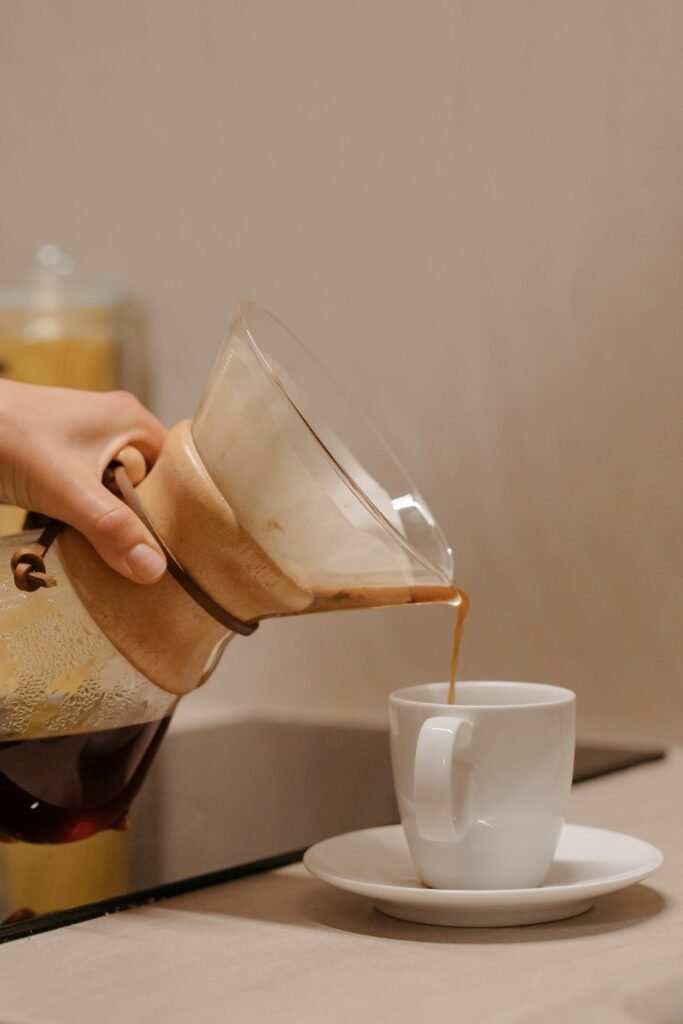
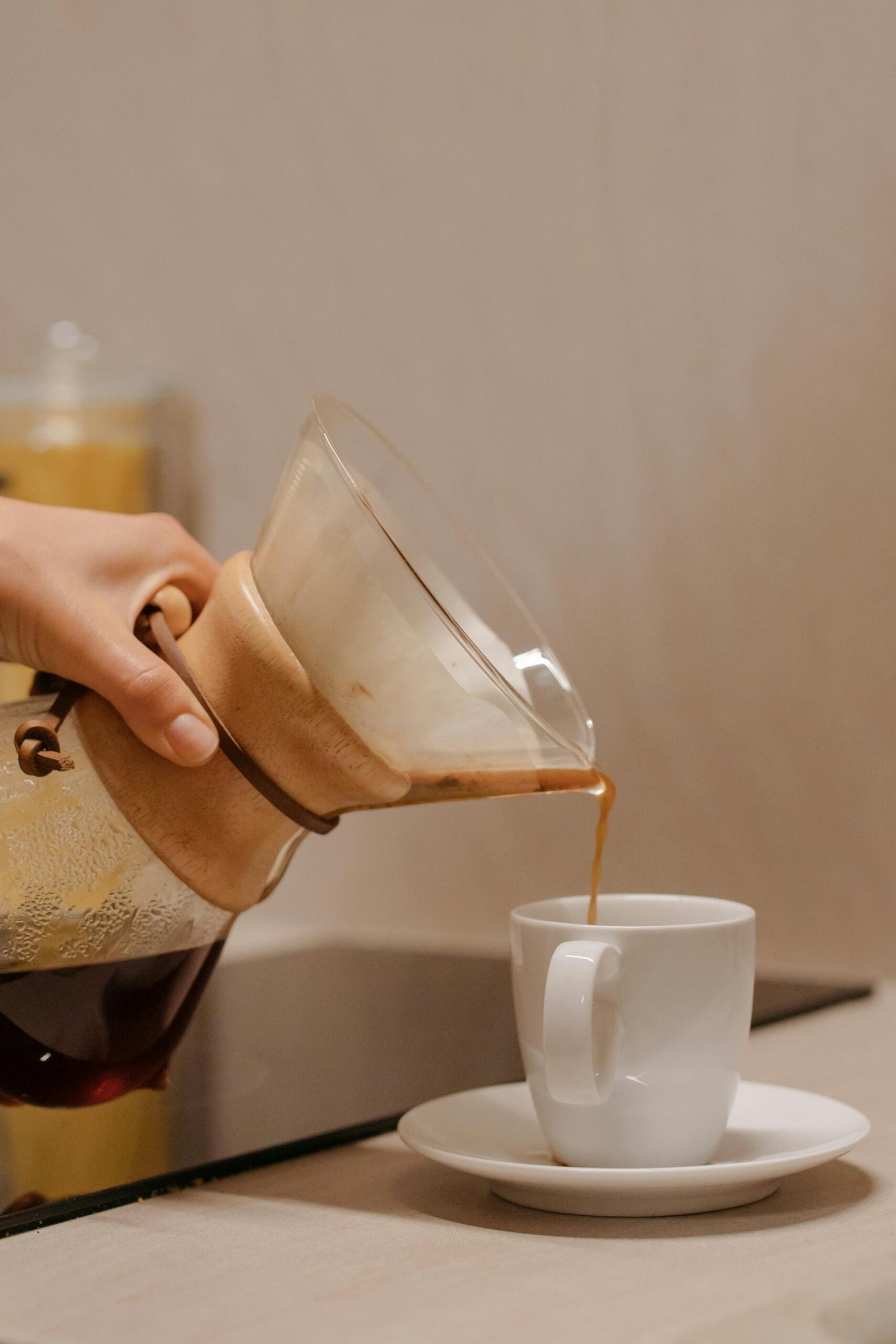
    Close-up of handcrafted coffee being poured into a white ceramic cup indoors.

    Tools You’ll Need

    To achieve accurate brewing ratios, precision is key. Here’s a list of tools that can help:

    1. Digital Coffee Scale: A reliable scale with a precision of 0.1 grams is indispensable for weighing coffee and water accurately.
    2. Burr Grinder: Consistent grind size is essential for the uniform extraction that we desire. Try to stay away from inconsistent blade grinders and invest in a quality manual or electric burr grinder for the best results.
    3. Brewing Device: Whether you use a pour-over dripper, a French press, or an AeroPress, choose a device suited to your preferred brewing style. There is no “right” brewing style, but your style will be the basis for what type of ratio you start with.
    4. Gooseneck Kettle: For pour-over brewing methods, a gooseneck kettle provides better control over water flow.
    5. Timer: Precise timing ensures that your brew doesn’t under- or over-extract.

    Common Coffee Brewing Ratios

    Here are some popular brewing ratios based on brewing methods to get you started. If you aren’t satisfied with your results, have some fun and try experimenting with a slightly different ratio.

    Pour-Over (e.g., V60, Chemex): 1:15 to 1:17

    French Press: 1:12 to 1:15

    Espresso: 1:2 to 1:2.5

    AeroPress: Varies, but typically 1:15 to 1:17

    Cold Brew: 1:4 to 1:8 (concentrate)

    How to Calculate Brewing Ratios

    Here’s a step-by-step guide to calculating your brewing ratio:

    1. Decide on Your Ratio: For a standard pour-over, let’s use a 1:16 ratio.
    2. Determine Your Coffee Weight: Let’s say you’re using 20 grams of coffee.
    3. Calculate Water Weight: Multiply the coffee weight by the ratio. In this case, 20 grams × 16 = 320 grams of water.
    4. Brew Accordingly: Use your tools to measure and brew with precision.

    Tips for Perfecting Your Brew

    1. Experiment and Adjust: Ratios are starting points, not absolutes. That is why we find the world of coffee so exciting because it is both an art and science. Get creative and experiment within a range to find what suits your taste preferences.
    2. Use Fresh, Quality Beans: No matter how perfected your brewing techniques are, they still can’t salvage stale or subpar beans. Invest in freshly roasted, high-quality coffee.
    3. Pay Attention to Grind Size: Different brewing methods require specific grind sizes. Check out our Grind Size Guide and adjust your grinder settings to match your brew method.
    4. Monitor Extraction: Taste your coffee as you go. If it’s too strong or bitter, try a coarser grind or slightly less coffee next time. If it’s weak or sour, try a finer grind or more coffee.

    -the coffee collect
  • Arabica vs. Robusta Coffee Beans: What’s the Difference?

    Arabica vs. Robusta Coffee Beans: What’s the Difference?

    Arabica vs. Robusta Coffee Beans: What’s the Difference?

    For true coffee enthusiasts, understanding the nuances between different coffee beans is essential. At the heart of every cup lies a choice between two primary species of coffee: Arabica and Robusta. These beans dominate the coffee world, each bringing its unique characteristics to the table. But what sets them apart? Let’s dive into the details.

    Origin and Growing Conditions

    Arabica coffee, scientifically known as Coffea arabica, is the most popular type of coffee, accounting for about 60-70% of global production. It originated in the highlands of Ethiopia and thrives in cool, subtropical climates at altitudes of 2,000 to 6,000 feet. Arabica plants are delicate and require careful cultivation, as they are more susceptible to pests, diseases, and frost.

    Robusta coffee, or Coffea canephora, is native to sub-Saharan Africa and grows at lower altitudes, often below 2,000 feet. Robusta plants are hardier and more resilient, capable of withstanding higher temperatures and more challenging environmental conditions. This durability makes them easier and cheaper to cultivate, particularly in regions like Vietnam, Brazil, and Indonesia.

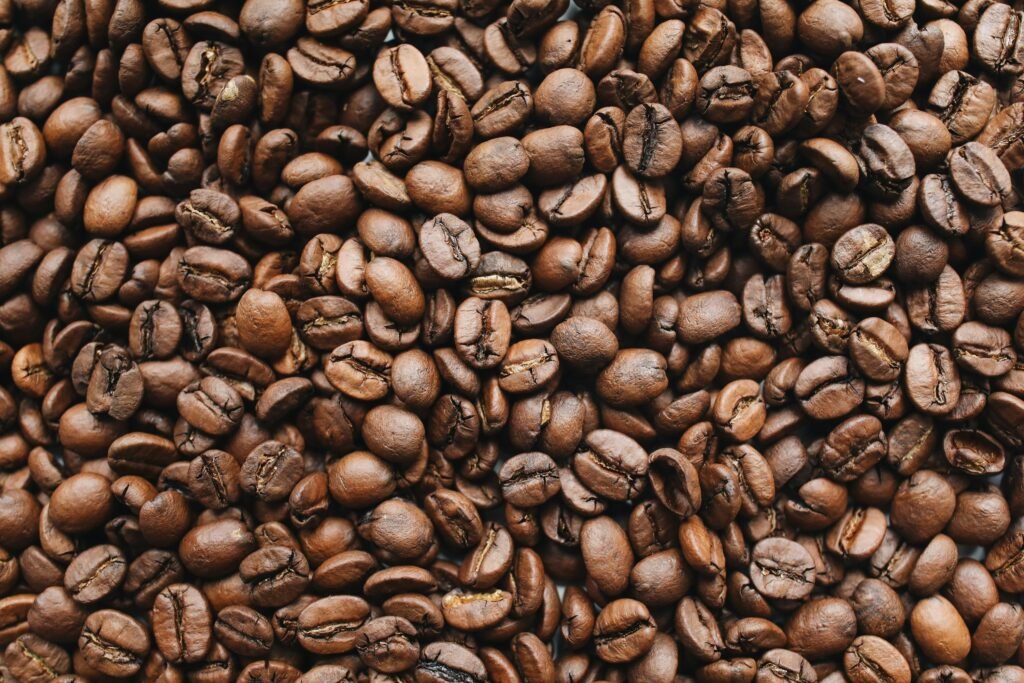
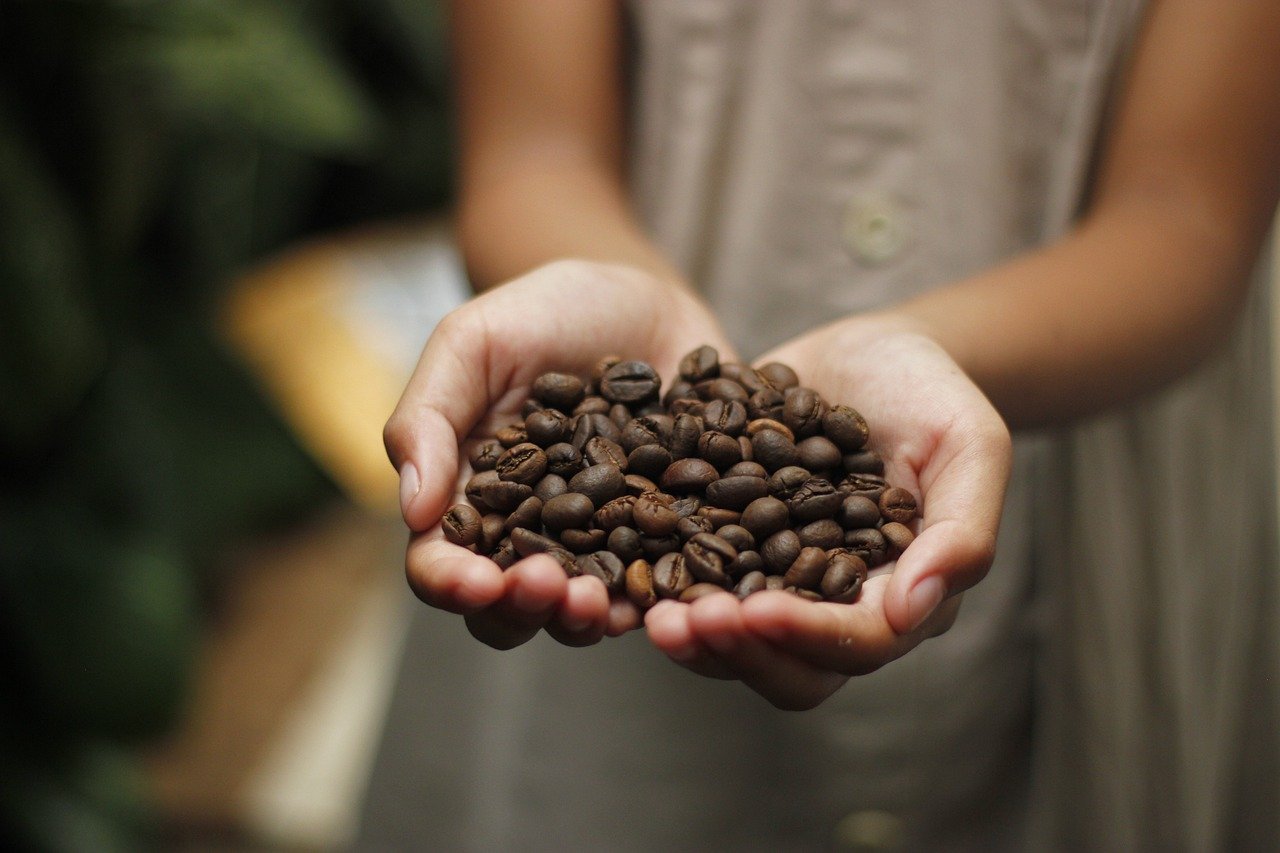
    A high-resolution close-up photo of rich, aromatic roasted coffee beans.

    Flavor Profiles

    One of the most significant differences between Arabica and Robusta lies in their flavor profiles, and learning the difference between the two can significantly upgrade your coffee expertise. Arabica beans are celebrated for their nuanced flavors, which often include hints of fruit, berries, nuts, and chocolate. They have a higher acidity, which lends a bright and vibrant quality to the cup. Robusta beans, on the other hand, are known for their bold and robust taste. They often have earthy, woody, or even rubbery notes, with a stronger bitterness and lower acidity. By understanding these flavors and developing your taste profile, you’ll be able to detect what kind of bean your coffee came from in the first few sips alone.

    Understanding coffee bean flavor profiles will also benefit your artistic ability in coffee curation by enabling you to understand what bean to use according to your desired outcome. Arabica coffee is typically smoother and less bitter, making it the preferred choice for specialty coffee. Robusta coffee’s flavor is less complex, but its intense profile is ideal for espresso blends, where a thick crema and punchy flavor are desired.

    Caffeine Content

    Caffeine lovers take note: Robusta beans pack a more potent punch. They contain nearly twice the caffeine of Arabica beans—about 2.2-2.7% compared to Arabica’s 1.2-1.5%. For this reason, espresso is commonly made from Robusta beans while Arabica beans make up a large portion of specialty coffee. This higher caffeine content not only contributes to Robusta’s stronger flavor but also acts as a natural pest deterrent, making the plants more resistant to diseases.

    Appearance and Bean Shape

    The physical differences between Arabica and Robusta beans are subtle but noticeable:

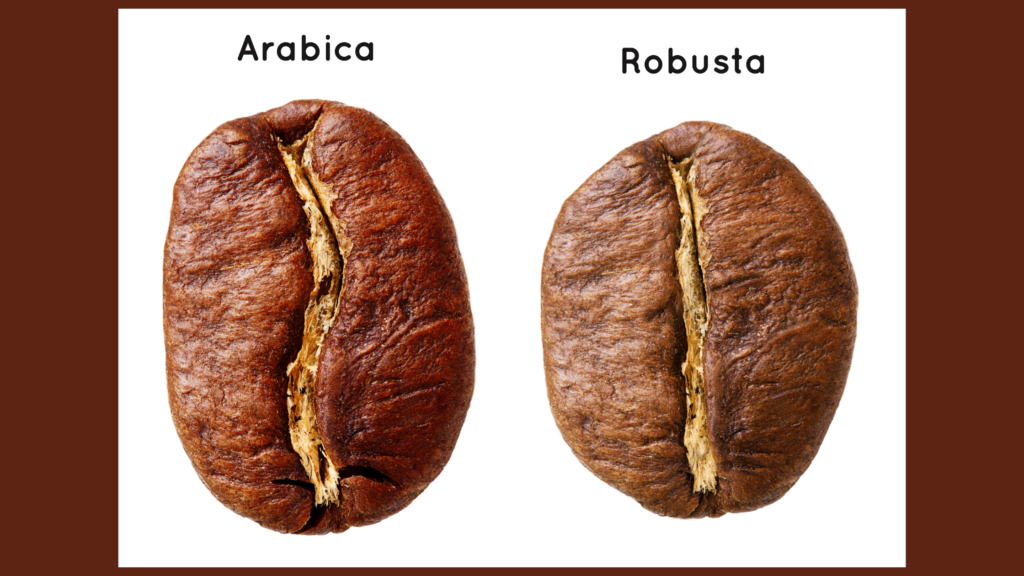
    • Arabica beans are oval-shaped with a curved crease down the center.
    • Robusta beans are smaller, rounder, and have a straighter crease.

    Price and Availability

    Arabica coffee is generally more expensive than Robusta due to its higher cultivation costs, susceptibility to pests, and lower yields. Its superior flavor and widespread demand among specialty coffee roasters further drive up its price.

    Robusta coffee, being easier to grow and harvest, is more affordable and widely used in instant coffee, espresso blends, and commercial coffee products. Its affordability doesn’t diminish its value, especially in blends where its robust nature shines.

    Which Should You Choose?

    Your choice between Arabica and Robusta depends largely on your taste preferences and how you enjoy your coffee; If you savor complex, fruity, and aromatic flavors, Arabica is your go-to bean; If you prefer a strong, bold coffee with a caffeine kick, or if you’re crafting an espresso, Robusta might be the better option. Additionally, many coffee blends combine Arabica and Robusta to create a harmonious balance—pairing Arabica’s sweetness and complexity with Robusta’s strength and crema-producing qualities.

    Remember, coffee is an art and science. A higher knowledge of coffee broadens your range of experimentation and artistry and allows you to curate unique and professional outcomes.

    -the coffee collect.