
The Art of Coffee Roasting: Light vs. Medium vs. Dark
The Coffee Collect is reader supported. When you purchase through links on our site, we may earn an affiliate commission—at no extra cost to you. Your support helps us continue sharing coffee inspiration, tips, and discoveries with this community. Thank you for being a part of our coffee journey!
Coffee roasting is where science meets artistry. It’s the transformative moment when green coffee beans are turned into the aromatic, complex beans we know and love. Understanding roast levels helps you choose coffee that fits your taste, brewing method, and even the mood you’re in.
In this guide, we’re breaking down light vs. medium vs. dark coffee roasts, what makes each unique, and how to decide which one belongs in your cup.
What is Coffee Roasting?
Coffee roasting is the process of applying heat to green coffee beans to unlock their flavors, aromas, and textures. As beans roast, they go through chemical changes—like the Maillard reaction and caramelization—that create hundreds of flavor compounds.
What’s Maillard reaction?
The Maillard reaction is a complex series of chemical reactions between amino acids (from proteins) and natural sugars that occurs when coffee beans are exposed to heat during roasting. It begins once the beans reach higher temperatures and continues through much of the roasting process.
This reaction is largely responsible for the browning of the beans and the development of many of coffee’s most recognizable flavors and aromas—such as caramel, toasted bread, nuts, cocoa, and savory notes. Unlike simple caramelization (which involves sugars alone), the Maillard reaction creates hundreds of new flavor and aroma compounds, adding depth and complexity to the cup.
The extent of the Maillard reaction varies by roast level.
- In light roasts, it’s just beginning, allowing brighter, origin-specific flavors to shine.
- In medium roasts, it’s more developed, creating balance and sweetness.
- In dark roasts, it dominates the flavor profile, contributing to bold, smoky characteristics.
In many ways, the Maillard reaction is where the art of roasting truly lives—small changes in time and temperature can dramatically shape how a coffee tastes in the final cup.
Roast level is determined primarily by time and temperature, not by the type of bean itself.
Contrary to popular belief, dark roasts do not necessarily have more caffeine, and light roasts aren’t “weaker”—they’re just different.
Coffee Brewing Equipment Defined
Light Roast Coffee
Light roasts are roasted for the shortest amount of time, typically stopped shortly after the “first crack” (when beans expand and crack audibly).
Flavor Profile:
- Bright acidity
- Fruity, floral, or citrus notes
- Pronounced origin characteristics
Body & Appearance:
- Light brown color
- No surface oils (dryer appearance)
- Lighter body
Best For:
- Pour-over
- Drip coffee
- Tasting single-origin beans
Light roasts highlight the natural character of the coffee bean and the region it comes from. If you love nuanced flavors and enjoy coffee tasting like berries, stone fruit, or tea, light roast is a beautiful place to start.
Medium Roast Coffee
Medium roasts strike a balance between origin flavor and roast development. They’re roasted longer than light roasts but stopped before oils rise to the surface.
Flavor Profile:
- Balanced acidity
- Notes of caramel, chocolate, and nuts
- Smooth and approachable
Body & Appearance:
- Medium brown color
- Minimal oil
- Medium body
Best For:
- Drip coffee
- French press
- Espresso (especially when using for milk-based drinks)
Medium roasts are often the most crowd-pleasing. They offer depth without bitterness and are a great daily driver if you enjoy a well-rounded, comforting cup.
Dark Roast Coffee
Dark roasts are roasted well past the second crack, resulting in bold, smoky flavors and visible oils on the bean surface.
Flavor Profile:
- Low acidity
- Bitter-sweet, smoky, or toasted notes
- Flavors driven by the roast rather than origin
Body & Appearance:
- Dark brown to nearly black
- Shiny, oily surface
- Full body
Best For:
- Espresso
- Moka pot
- Cold brew
Dark roasts are rich and intense, often associated with traditional espresso and classic diner coffee. If you love boldness and a lingering finish, dark roast delivers that familiar, grounding experience.
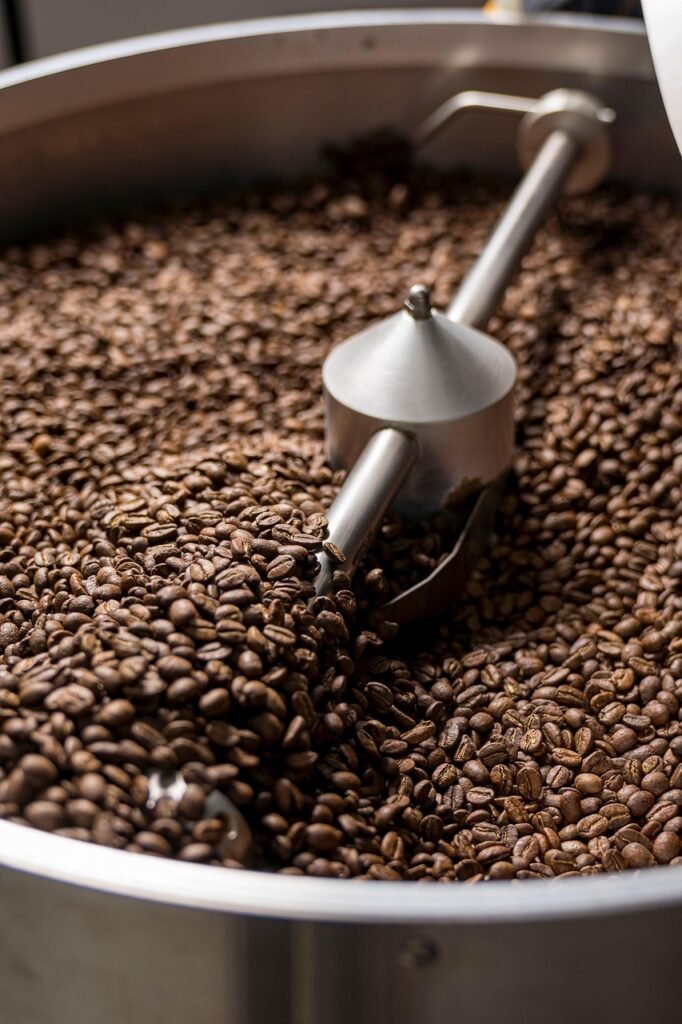
A Glimpse Into a Coffee Roaster’s Work
It would be unfair if we did all this talk about roast-level without mentioning the work that goes into it.
Behind every roast is a roaster making thoughtful decisions in just minutes. They’re listening for cracks, watching color changes, adjusting heat, and thinking ahead—asking what flavors to highlight and how best to honor the bean’s origin.
Much of their work happens quietly and repeatedly: testing batches, tasting, adjusting by seconds or degrees, and responding to factors most people never notice, like humidity or bean density. Roasting isn’t about forcing flavor, but carefully revealing what’s already there.
When we understand this, roast levels become more than labels—they become the result of intention, patience, and craft.
Which Roast Level Is Right for You?
Choosing a roast level isn’t about right or wrong—it’s about preference and intention.
- Love bright, complex flavors? Try light roast.
- Want balance and versatility? Medium roast is your go-to.
- Crave bold, smoky depth? Dark roast has your name on it.
Your brewing method, milk preferences, and even the season can influence what roast feels best. Coffee is meant to be explored—there’s freedom in experimenting.
Roasting is a craft that requires precision, patience, and creativity. Each roast level tells a different story, revealing how heat shapes flavor and how small choices make a big difference. When we understand roast levels, we can more fully recognize and appreciate the artistry and labor that shape each roast.
What’s your current go-to roast? We’d love to know!
Don’t forget to join our coffee community on Instagram @the.coffee.collect!
-the coffee collect.