Tag: espresso machine

  • Citaly GO-1 Portable Espresso Machine Review

    Citaly GO-1 Portable Espresso Machine Review

    There are few things I love more than a good cup of coffee, and there are few things more disappointing than being somewhere without a decent way to make one.

    That is exactly why portable coffee makers have become so interesting to me.

    I love drinking coffee at home, but I also love a good adventure.

    Whether I’m sitting on the porch, traveling, camping, staying in a hotel, or simply spending a morning somewhere without access to my espresso machine, having a way to make a real espresso drink can be a game changer.

    And honestly, life is all about the little things.

    So when I got the chance to try the little  Citaly GO-1 Portable Espresso Machine from Wirsh, I was pretty excited.

    This little machine is designed to let you make espresso without being tied to a traditional espresso machine or an electrical outlet. It can use either coffee grounds or coffee capsules, has a built-in rechargeable battery, and can even heat the water itself.

    But does this portable espresso machine actually make good espresso?

    And more importantly, is it worth the price?

    After spending time using the Citaly GO-1, here is my honest review…


    A quick disclaimer before we get started

    The Citaly GO-1 was provided to me by Wirsh for review. That means I did not purchase the machine myself, but this review reflects my genuine experience with the product. Wirsh did not determine what I would say in this review, and I am sharing both the things I really love about the machine and the things I think you should know before buying it.

    Now, let’s get into the coffee…


    What is the Citaly GO-1?

    The Citaly GO-1 is a portable, battery-powered espresso machine designed for making espresso when you don’t have access to a traditional espresso machine.

    Unlike some portable espresso makers that require you to heat water separately, the GO-1 has a built-in heating system. That means you can add cold water, turn on the machine, and let it heat the water before brewing.

    The machine can heat cold water and brew espresso in approximately 3–4 minutes. If you already have hot water, brewing is significantly faster.
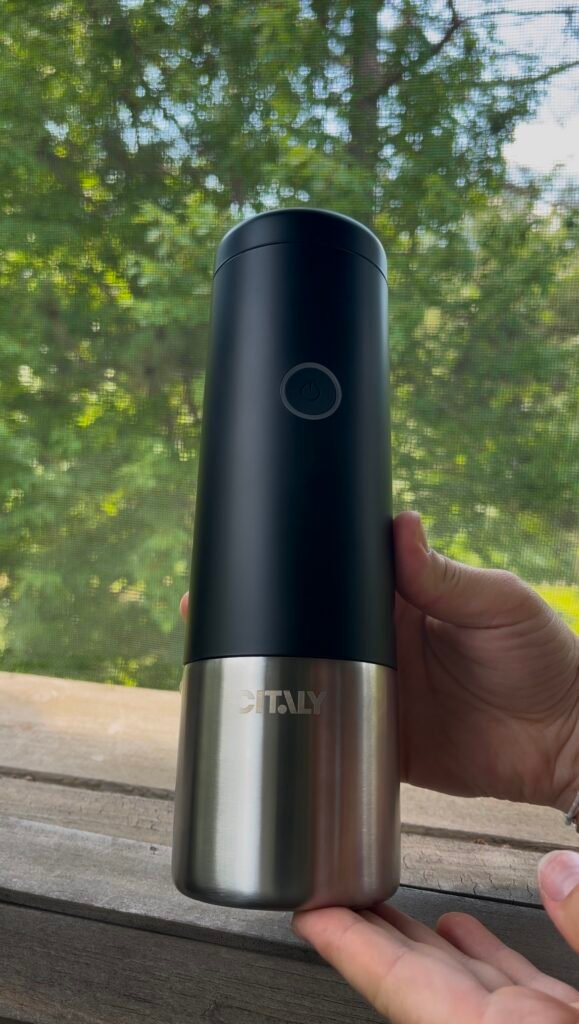
    It also gives you two different ways to make your coffee:

    • Ground coffee
    • Nespresso Original Line-compatible capsules

    And it also gives you two different brewing modes:

    • Espresso Extraction
    • Cold Brew Extraction

    That flexibility is one of the things I think makes this machine particularly appealing for travel.

    You can bring your favorite beans and grind them fresh using a portable grinder, or you can throw a few capsules into your bag when you want something extremely simple.


    My first impression

    The first thing I noticed about the Citaly GO-1 is just how compact it is.

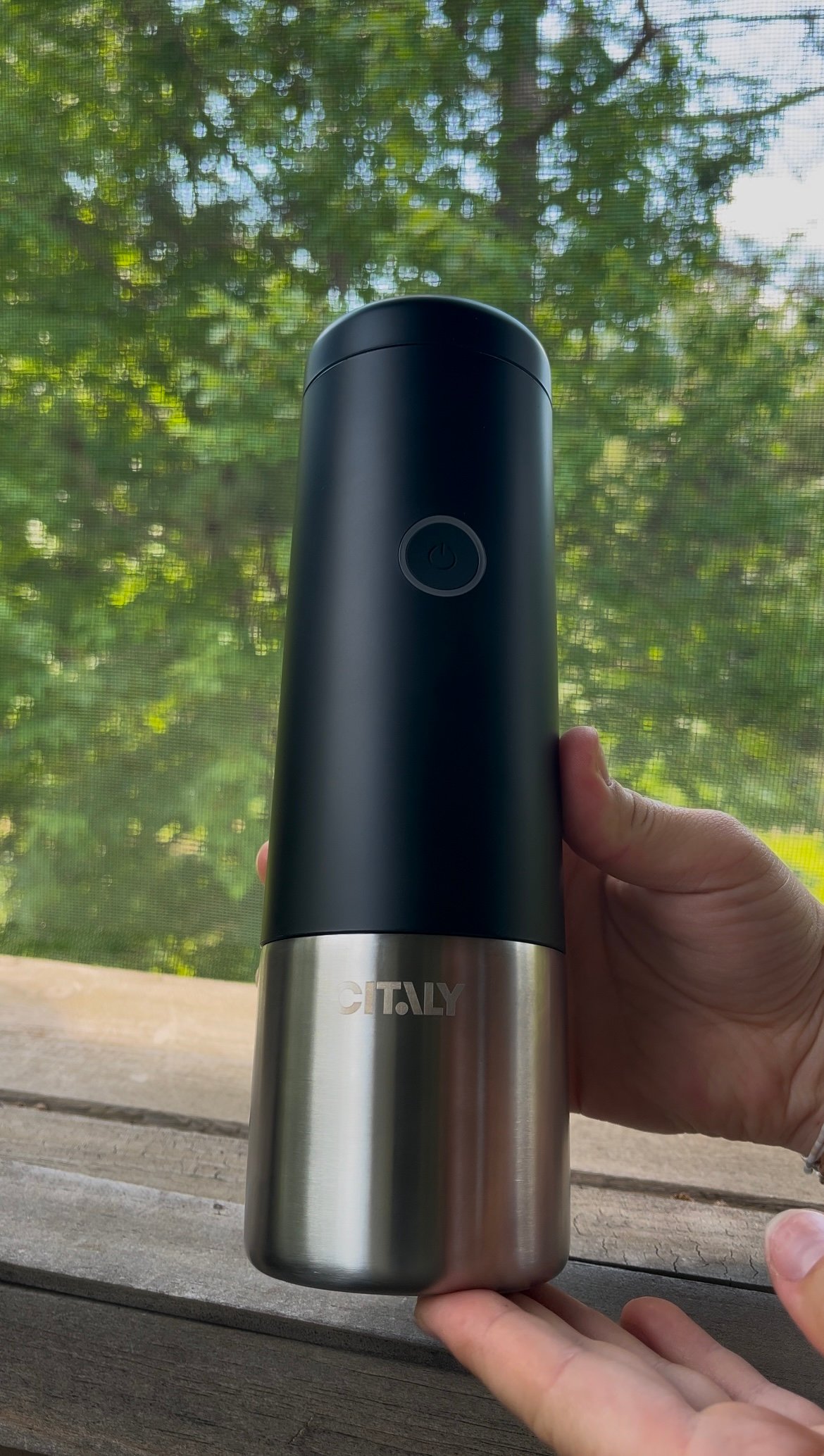
    It has a tall, narrow design rather than looking like a miniature traditional espresso machine. Wirsh lists the dimensions at approximately 69mm × 224.5mm and the weight at about 760 grams. (Imagine one of those thermal water bottles designed to fit in all cupholders/backpack side pockets)

    The entire point is portability.

    I can see this being particularly useful for someone who travels frequently, goes camping or RVing, spends time at a lake or cabin, or simply wants to have espresso available somewhere that doesn’t have a coffee setup, such as an office.

    For me, one of the biggest appeals was being able to take my espresso routine with me when I go camping. I also really enjoy going out and watching sunrises with a coffee in hand, and this allows me to make coffee during the sunrise which is super-duper cool.

    All in all, this machine simply gives you lots of freedom.


    How does the Citaly GO-1 work?

    The basic process is surprisingly simple.

    You add your coffee grounds or capsule, add your water, turn the machine on by clicking one button, and let it do its thing.

    The machine has a built-in rechargeable battery, so you aren’t required to plug it into an outlet while brewing.


    Cold water vs. hot water

    If you’re using cold water, the machine heats the water before extraction.

    If you’re using hot water, you can skip that heating process and get your espresso much more quickly.

    That distinction is important.

    If you’re traveling somewhere where you don’t have access to hot water, the self-heating feature is a huge part of what makes the Citaly GO-1 useful.

    But if you’re at home or somewhere with a kettle, coffee maker, microwave, etc., using hot water is much faster.

    So I wouldn’t necessarily think of the self-heating feature as the fastest possible way to make espresso.

    I’d think of it as the feature that gives you freedom from needing another appliance.

    And that is a pretty big deal when you’re traveling.


    Cold Brew Mode

    The Citaly GO-1 has a cold brew mode that can be activated with cold water (below 50°C) by double-pressing the button.

    Cold brew extraction takes longer than espresso extraction, but the result is a nice, smooth, and less bitter coffee. 

    Speaking from experience, it tastes amazing when brewed over ice on a hot summer day.


    How does the coffee taste?

    This is probably the most important question.

    Because honestly, I don’t care how portable an espresso machine is if the coffee tastes terrible.

    The Citaly GO-1 produces a legitimate espresso-style extraction with a layer of crema, and I was pleasantly surprised by the overall result.

    I made an instagram reel using the Citaly GO-1 and even some of my followers commented on how surprised they were by how impressive the extraction was.

    That said, I think it’s important to have realistic expectations.

    This is a portable espresso machine, not a full-size espresso machine with a commercial grinder, 58mm portafilter, adjustable pressure, temperature controls, and a steam wand.

    If you are someone who loves dialing in espresso shots and adjusting every variable of the extraction, this isn’t going to give you the same experience as your countertop setup.

    But if your goal is:

    “I want a good espresso shot when I’m away from home.”

    That’s where this machine makes a lot more sense.

    And for that purpose, I think it does an impressive job.


    Ground coffee vs. capsules

    One of my favorite things about the Citaly GO-1 is that you aren’t locked into one brewing method.

    The machine can use Nespresso Original Line-compatible capsules as well as ground coffee. Wirsh specifically notes that it is not compatible with Nespresso Vertuo or Dolce Gusto capsules, so keep that in mind.

    Using coffee grounds

    If you’re like me, the ground coffee option is probably going to be your favorite.

    You can use freshly ground coffee from your favorite roaster and have much more control over what you’re drinking.

    The machine includes a reusable stainless-steel filter basket designed specifically for ground coffee.

    The obvious downside is that grounds require a little more work.

    You need to have coffee available, grind it ahead of time or bring a portable grinder, dose it into the basket, and clean the basket afterward.

    But personally, I think that’s worth it if you’re trying to get the best cup possible.

    Using capsules

    Capsules are where the convenience factor really shines.

    If you’re going on a trip and don’t want to bring a grinder or worry about measuring coffee, you can simply pack a handful of capsules.

    Pop one in, brew, and you’re done.

    For travel, I think this is probably the easiest way to use the machine.

    And because the machine accepts Nespresso Original Line-compatible capsules, you have plenty of options when it comes to coffee. Shop Nespresso Original Line capsules HERE


    Check out the → Geimori T38 Portable Coffee Grinder ←


    What I love about the Citaly GO-1

    1. It is genuinely portable

    This might sound obvious, but portability is the entire reason you would buy this machine—and I think the Citaly does a good job of delivering on that promise.

    It is small enough to put in a backpack, suitcase, or travel bag without taking up a ridiculous amount of space.

    It also doesn’t require you to find an outlet just to make your coffee.

    That is a huge advantage over traditional espresso machines.

    2. The built-in heating is incredibly convenient

    This is probably my favorite feature.

    You don’t necessarily need to carry around a kettle or find somewhere to heat water.

    You can add cold water and let the machine do the heating for you.

    It takes approximately 3–4 minutes to heat cold water to brewing temperature.

    That isn’t instantaneous, but considering that you’re heating the water and brewing the espresso from a battery-powered portable machine, I think it’s pretty impressive.

    3. You have the choice between grounds and capsules

    I really appreciate having both options.

    There are mornings when I want to use my own coffee, and there are situations where I want the absolute easiest option possible.

    The Citaly gives you both.

    4. The stainless-steel cup is a nice touch

    The machine uses a double-walled SUS316 stainless-steel cup rather than relying entirely on plastic for the coffee receptacle.

    It feels much nicer than some of the flimsy plastic cups I’ve seen included with portable coffee makers.

    5. It’s fun!

    This might sound like a silly thing to include in a product review, but it matters.

    There is something genuinely fun about making an espresso with a machine this small.

    It turns “I’m going to make coffee” into a little experience.

    And if you’re a coffee person, you probably understand exactly what I mean.


    No product is completely perfect

    Now for the part I think is especially important in a product review.

    No product is perfect, and I don’t want this review to pretend that it is.

    1. It isn’t going to replace your home espresso machine

    This is the biggest thing I would want a potential buyer to understand.

    If you’re looking for a machine to replace your traditional espresso setup, this isn’t it.

    You don’t get the same level of control over extraction that you get with a full-size espresso machine.

    There is no steam wand, no large portafilter, no built-in grinder, and no ability to fine-tune your espresso in the same way you can with a traditional setup.

    The Citaly GO-1 is best viewed as a travel companion, not a replacement for your home espresso machine.

    2. The water capacity is on the smaller side

    The maximum water capacity is around 50mL.

    That makes sense for a portable espresso machine, but it does mean you have the maximum capacity to make a little less than two full espresso shots at a time rather than a large cup of coffee.

    If you’re hoping to press one button and have a 12-ounce iced latte ready to drink, you’re going to have to do a little more work.

    Personally, I think this is a reasonable trade-off for the size of the machine—but it’s something you should know before purchasing.

    3. There is still some cleanup involved

    Portable doesn’t mean maintenance-free.

    The parts are detachable and rinseable, which makes cleaning relatively straightforward.

    But if you’re using ground coffee, you still have a coffee basket to empty and rinse.

    That’s not a dealbreaker for me, but if your ideal travel coffee routine is “make coffee and don’t clean anything,” capsules will definitely be the easier option.

    4. Battery Life Requires Attentiveness and Planning

    Like any portable device, you’ll also need to pay attention to the battery level and remember to charge it before heading out.


    How many shots can it make?

    This is one area where I would pay attention to how you’re using the machine.

    Wirsh states that the machine can make approximately 3–4 cups when using the full heating cycle with cold water, while hot-water brewing allows for significantly more shots because the battery isn’t being used to heat the water.

    For me, this reinforces what I think is the ideal use case:

    One or two people who want espresso while traveling.

    If you’re trying to make espresso for an entire group of people every morning using cold water, you’re probably going to find yourself reaching the battery limitations pretty quickly.


    Who should buy the Citaly GO-1?

    The Citaly GO-1 would be ideal for someone who:

    • Loves espresso but travels frequently
    • Wants espresso without an outlet
    • Wants flexibility
    • Has limited space

    And it would be great in environments like:

    • Dorm rooms
    • Road trips
    • Camping
    • RVs
    • Hotels
    • Offices
    • Travel
    • Cabins
    • Lake weekends
    • Early-morning outdoor adventures

    Who probably shouldn’t buy it?

    I wouldn’t recommend the Citaly GO-1 if:

    • You want a full home espresso setup.
    • You want complete control over your extraction.
    • You regularly make coffee for a large group.
    • You only drink drip coffee or large cups of coffee.

    My overall verdict

    After using the Citaly GO-1, I think the most important thing to understand is that its biggest strength isn’t that it is the best espresso machine ever made.

    Its biggest strength is that it lets you have espresso almost anywhere.

    And that is a pretty cool thing.

    I would never choose this over my full-size espresso machine when I’m at home and have access to my entire coffee setup.

    But that’s not the point.

    If I’m traveling, camping, staying somewhere without an espresso machine, or sitting outside and want to make a real espresso drink without going back inside, suddenly this little machine becomes incredibly appealing.

    The Citaly GO-1 takes something that normally requires a countertop, an electrical outlet, a grinder, and a fairly involved setup and shrinks it down into something you can throw in a bag.

    For the coffee lover who refuses to settle for bad travel coffee, the Citaly GO-1 is definitely worth considering.

    Because sometimes the best part of making coffee isn’t even the coffee.

    It’s where you get to drink it.


    Want to try the Citaly GO-1?

    You can learn more about the Citaly GO-1 and check the current price directly from Wirsh by clicking the button below ↓

    Don’t forget to use my exclusive code COFFEECOLLECT30 for 15% off on up to two products!
  • Dorm Room Espresso Machines: The Best Espresso Machines for College Students

    Dorm Room Espresso Machines: The Best Espresso Machines for College Students

    There are two types of college students.

    The ones who willingly spend $7 every morning on an iced latte before class…

    …and the ones who realize they can make an even better one in their dorm room.

    Hi! My name is Annaliese, and I’m both a college student and a barista of over 3 years who loves everything about coffee. Over the past few years, I’ve spent countless hours making espresso behind the bar, testing home espresso machines, and building a coffee setup that fits inside a tiny dorm room.

    One thing I’ve learned? You don’t need tons of space—or thousands of dollars—to enjoy incredible espresso at college.

    If you’re moving into your freshman dorm, upgrading your apartment coffee bar, or finally tired of relying on dining hall coffee, this guide will help you find an espresso machine that fits your space, your budget, and your coffee goals.

    Let’s find your perfect setup.


    What Makes a Great Dorm Room Espresso Machine?

    Dorm rooms come with unique challenges.

    Counter space is limited. Storage is even more limited. And unless your roommate is also a coffee enthusiast, you’ll probably want something that’s easy to use and doesn’t take over the entire room.

    When I’m recommending an espresso machine for college students, I look for a few things:

    • A compact footprint
    • Beginner-friendly operation
    • Easy cleanup
    • A removable water tank
    • Enough power to make real espresso—not just strong coffee
    • Reliability for everyday use
    • A price that makes sense for a college budget

    If a machine checks all of those boxes, it’s worth considering.


    Before You Buy: Check Your Dorm’s Appliance Policy

    Every college has different rules.

    Most schools allow coffee makers and dorm room espresso machines, but some have restrictions on appliance wattage or certain types of heating elements.

    Before ordering a machine, take two minutes to check your residence hall handbook. It’s much better than discovering on move-in day that your dream coffee setup has to stay at home.


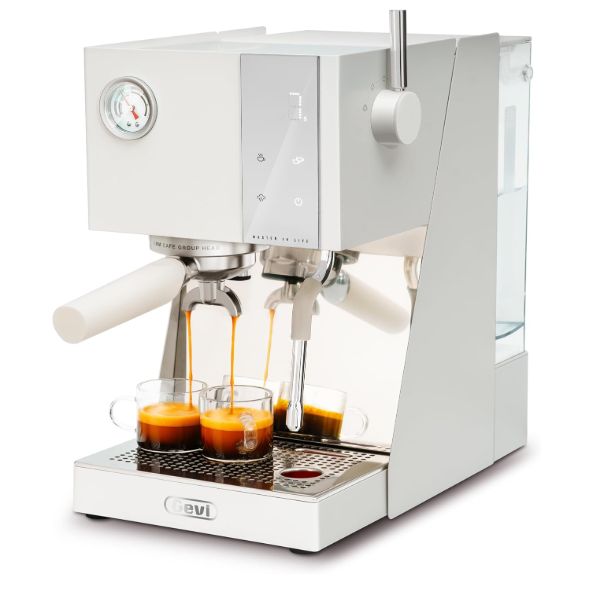
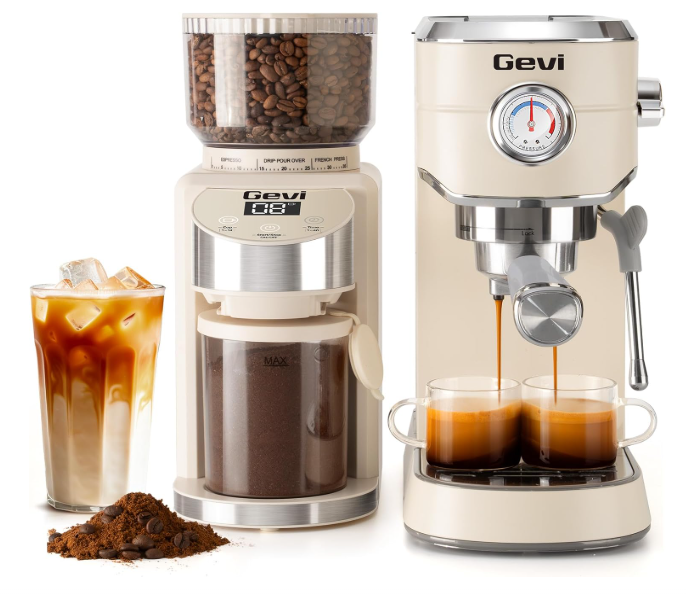
    My Top Pick: Gevi 20 Bar Espresso Machine + Conical Burr Grinder

    If I could recommend just one espresso setup for college students, this would be it.

    After using several home espresso machines over the years, the Gevi 20 Bar Espresso Machine paired with its matching conical burr grinder has become my favorite recommendation.

    As someone who works as a barista, I can honestly say that having a quality grinder makes just as much of a difference as having a quality espresso machine. The included grinder features 35 precise grind settings, which means you can actually dial in your espresso instead of settling for “good enough.”

    A few reasons I love this setup:

    • Compact enough for a dorm room or apartment
    • Beautiful, modern design that doesn’t look bulky
    • 20-bar pressure for rich espresso
    • Powerful steam wand for homemade lattes and cappuccinos
    • Removable water tank for easy refilling
    • Conical burr grinder that improves overall espresso quality
    • Easy enough for beginners while still giving you room to grow as a home barista

    One of my favorite things about this machine is that it doesn’t feel like something you’ll outgrow after graduation. It’s a machine you can genuinely enjoy throughout college and continue using long afterward.

    If you’re serious about making café-quality coffee at home, this would absolutely be my first recommendation.

    Check it out here! ↓


    Best Budget Options

    Not everyone is ready to invest in a premium espresso setup—and that’s okay.

    If your budget is closer to the $100–$150 range, there are several excellent beginner machines that can still make enjoyable espresso while helping you learn the basics.

    Here’s a few I’d recommend:

    • atatix Espresso Machine: This is the first espresso machine I had in my dorm room. I loved how small it was and how easy it was to use. It also comes in a few different colors so you can match the aesthetic of your dorm room! Click HERE to shop!
    • CASABREWS 3700 Espresso Machine: Last I checked, this one was only $98 which is perfect for a college student’s budget! It’s compact, stylish, and would work perfectly in a dorm room setting! Click HERE to check it out!
    • Wirsh Home Barista Plus: This one is compact, easy to use, and reliable. It is also BPA-free which means you don’t have to worry about some unwanted plastics sneaking into your daily latte! You can also use my code COFFEECOLLECT30 to get an exclusive 15% off! Click HERE to shop!

    Accessories That Make Your Dorm Coffee Bar Even Better

    The espresso machine is only part of the equation.

    A few small accessories can completely transform your daily coffee routine.

    Here are a few of my favorites:

    These aren’t all necessities, but they’ve definitely made my own dorm coffee setup feel more like a tiny official café 😉


    Is an Espresso Machine Worth It in College?

    Yes. Absolutely. 100%. Sí. Always.

    (for me at least haha)

    Let’s say you buy a latte before class four times each week.

    At around $7 per drink, that’s roughly $28 every week.

    Over a 15-week semester, that’s about $420.

    By the end of the school year, you’ve likely spent well over $800 on coffee alone.

    While buying an espresso machine is definitely an investment, it can quickly become one of those purchases that saves you money over time—especially if you’re already someone who loves specialty coffee.

    And honestly? Saving money isn’t even the best part.

    There’s something really special about making your own latte just the way you like it before an early class or inviting friends over for coffee and study dates.

    It’s safe to say that some of my favorite college memories have definitely happened around my dorm room coffee bar.


    The Ultimate Dorm Room Coffee Bar Setup


    My Biggest Advice

    Don’t buy the biggest espresso machine you can find or the most expensive one.

    Buy the one you’ll actually enjoy using every day.

    Your dorm room doesn’t need to look like a commercial café.

    Start with a quality machine, a grinder, fresh coffee beans, and a willingness to learn.

    You’ll improve with every shot you pull <3


    Do I need a grinder?

    (A frequently asked question)

    It’s not necessary however I definitely recommend you do haha—a burr grinder is one of the best investments you can make. Freshly ground coffee makes a noticeable difference in espresso quality.

    Here’s a few good burr grinders I’d recommend for a college dorm room:

    • Geimori T38: Its little, its quiet, its battery powered, its portable… yeah, this one is great for a dorm room. Click HERE to check it out.
    • AAOBOSI Cordless Burr Coffee Grinder: This one is slightly bigger than the one above, but it is cordless and customers seem to be very happy with its performance. Click HERE to check it out.
    • CEVING Mini Manual Coffee Grinder: This one is low cost with high-quality results. Perfect for a college student’s budget! Click HERE to check it out.

    Come Hang Out with Me on Instagram!

    If you’re anything like me, coffee is about so much more than caffeine.

    It’s slow mornings before class.

    Hosting friends in your dorm.

    Trying new recipes.

    Learning new skills.

    And creating little moments that make college feel a bit more like home.

    If you’d like even more dorm coffee inspiration, homemade drink recipes, honest coffee gear reviews, and behind-the-scenes looks at my own college coffee setup, I’d love to have you join me over on Instagram at @the.coffee.collect.

    That’s where I share my everyday coffee life as a college student, test new products, and hopefully inspire you to build a coffee setup you absolutely love.

    I’d love to see you there!


    Final Thoughts

    Finding the right dorm room espresso machine isn’t about buying the most expensive setup—it’s about finding one that fits your lifestyle.

    As both a college student and a barista, I know firsthand that great coffee doesn’t have to come from a coffee shop. With the right machine, and a little practice you can create drinks you’ll genuinely look forward to every single morning.

    I hope this guide helps you find a machine that makes your college mornings just a little bit better <3

    Happy brewing!

    — Annaliese
    The Coffee Collect.

  • Gevi Commercial Espresso Machine Review

    Gevi Commercial Espresso Machine Review

    An honest, unsponsored review of the Gevi Commercial Espresso Machine after real daily use, hosting, and pop-ups.

    For the longest time, I was using a pretty cheap espresso machine. It got the job done… but just barely. The shots were inconsistent, the steam wand felt like a guessing game, it overheated easily, and I always felt like I was missing out on what espresso could actually taste like.

    So I started looking for the best home espresso machine that didn’t break the bank—and quickly got overwhelmed.

    There are so many espresso machines out there. Some looked amazing but were way out of my budget, and others didn’t seem like enough of a step up to justify the cost. I went back and forth for a while, trying to figure out what was actually worth it.

    And then I found the Gevi Commercial Espresso Machine (20 Bar, Smart OPV, 58mm Portafilter)—and honestly, I haven’t looked back since.

    Note: This post is not sponsored. I purchased and reviewed this machine on my own because I genuinely wanted an upgrade. Some links may be affiliate links, which means I may earn a small commission at no extra cost to you. I truly appreciate your support!


    First Impressions: A Machine That Feels Like a Step Up

    The first time I set this machine on the counter, it immediately felt like an upgrade. It has that clean, stainless steel look—but more importantly, it feels solid and intentional.


    Want to see how I’ve been using the Gevi Commercial Espresso Machine? Visit my Instagram page linked below!


    Dialing in the Shot: Learning Your Coffee Again

    The 20-bar pressure system paired with the Smart OPV doesn’t just pull strong shots—it helps you find balance. I started playing around more with grind size and dose, and for the first time, I could actually taste the difference those small changes made, which added a whole new realm of excitement to my home barista journey.


    The 58mm Portafilter: Where It Starts to Feel Like a Café

    This was a big moment for me.

    The 58mm portafilter is what you’ll find in many coffee shops, and having that at home changes everything. It gives you more control, and it makes the whole process feel more intentional and professional.


    Milk Frothing: Small Wins That Feel Big

    As always, the steam wand took a couple tries to get used to, but once I found the rhythm, it became part of my daily routine.

    This machine comes with a digital display, which allows you to monitor how long it takes to froth the perfect milk. This allows you to become super consistent and also make informed tweaks and adjustments if needed.

    I have found that it takes me about 60-75 seconds to steam the perfect milk for a double shot latte. While it’s not the strongest steam wand out there, it still gets the job done wonderfully.

    There’s something really satisfying about getting your milk just right so that you can start pouring some really awesome latte art.


    Beginner Espresso Setup: What to Buy First


    Durability: Built for Real-Life Coffee Moments

    One thing that really mattered to me—especially because I love hosting people and even doing small coffee shop pop-ups on my college campus—was durability.

    My old machine couldn’t keep up. After just a few shots in a row, it would overheat and slow everything down, which made it stressful anytime I had multiple people waiting for drinks.

    This machine has been a completely different experience.

    I’ve been able to pull 30+ shots back-to-back without any overheating issues or drop in performance. Whether I’m making drinks for friends or setting up a little pop-up, it actually keeps up with demand—which makes the whole experience feel smooth and enjoyable instead of chaotic.

    For me, that reliability is what really makes this feel like a true upgrade—not just in quality, but in what it allows me to do with coffee.


    Other Things to Appreciate

    There are a few smaller details that ended up making a big difference in my day-to-day experience with this machine.

    • Digital touch display: The interface is super simple and intuitive. It makes the whole process feel streamlined, and I love being able to monitor timing and make small adjustments without overthinking it.
    • Temperature control technology: This was something I didn’t fully appreciate until I started using it. The consistency from shot to shot is noticeably better, which makes dialing in your espresso so much easier.
    • Large water tank: If you’re making multiple drinks (especially when hosting or doing pop-ups), this matters more than you think. I’m not constantly refilling it, which keeps everything flowing smoothly.
    • Everything you need to get started: It comes with a tamper, a frothing pitcher, and four different baskets—single shot, double shot, and two dual-wall baskets. Whether you’re just starting out or experimenting more, it gives you options right away without needing to buy extra tools.

    These are the kinds of features that might not be the main selling point—but they’re what make you appreciate the machine more every time you use it.


    Who This Is For

    If I had to describe it simply, this machine is for someone who wants more out of their coffee—but doesn’t want it to feel intimidating—both in terms of price and the learning curve


    Final Thoughts

    Upgrading your espresso machine can feel like a big decision—especially when there are so many options and price points out there.

    But the Gevi Commercial Espresso Machine felt like the perfect middle ground for me. It’s a real upgrade without feeling out of reach, and it’s made my daily coffee routine something I genuinely look forward to.

    If you’ve been in that same place—using a basic machine and wondering if it’s worth upgrading—I can confidently say this one is.


    I hope this review helps in any way possible!

    Please reach out if you have any questions!

    coffee creates community.

    -the coffee collect.

  • How to Take Care of Your Espresso Machine

    How to take care of your espresso machine so it’ll love you back.


    If you’ve ever pulled a shot that tasted… off—thin, sour, strangely bitter—and thought, “It can’t be the beans… right?”—there’s a good chance your espresso machine is trying to tell you something.

    At The Coffee Collect, we believe great coffee starts long before the cup hits the counter. It begins with clean equipment, thoughtful care, and a little daily attention. Your espresso machine works hard for you—steaming milk, pumping water at high pressure, waking you up before the rest of the house is even stirring. Taking care of it isn’t glamorous, but it’s one of the most important habits you can build as a coffee lover.

    Let’s walk through exactly how to maintain your espresso machine, why descaling matters, and how different machines require different routines—plus where you can grab a reliable cleaner or descaler to make the whole process easier.

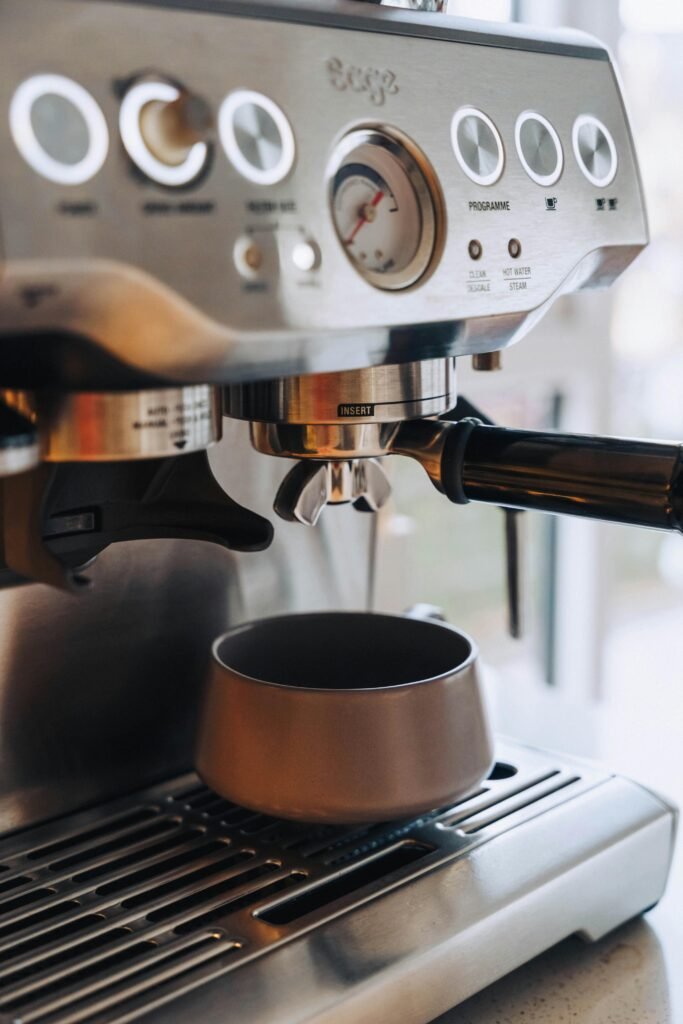
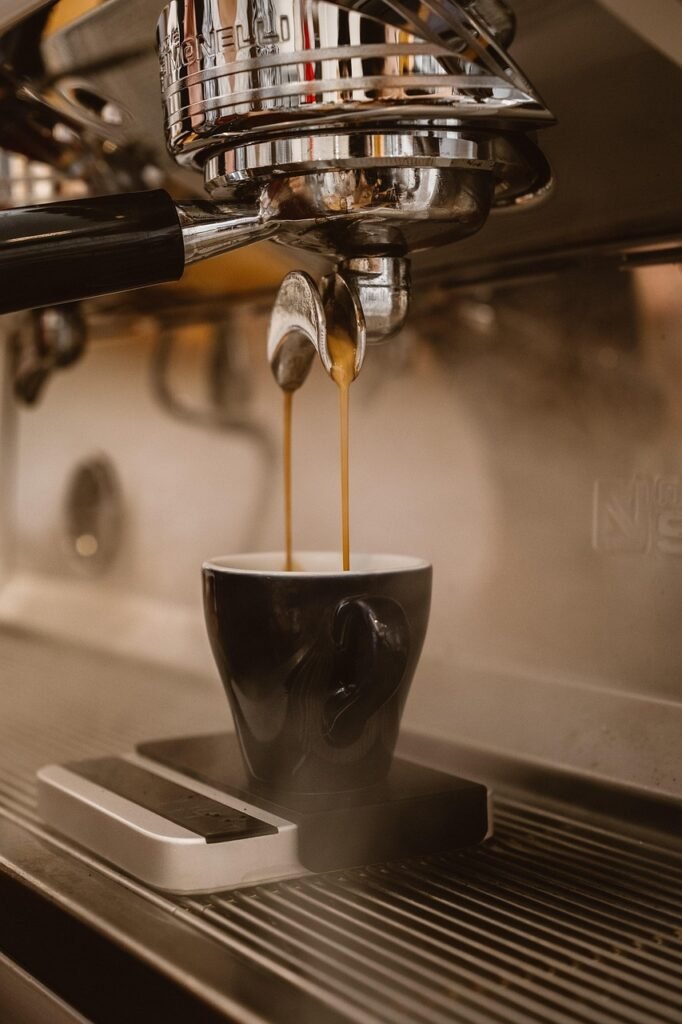
    Close-up of a modern espresso machine making a fresh coffee shot indoors.

    Why Espresso Machine Maintenance Actually Matters

    Espresso machines deal with three things constantly:

    • Heat
    • Pressure
    • Minerals from water

    Over time, coffee oils build up in your group head and portafilter. Minerals (especially calcium and magnesium) settle inside your boiler and tubing. Milk residue sneaks into steam wands. If left alone, all of this leads to:

    • Bitter or dull-tasting espresso
    • Weak steam pressure
    • Clogged valves and lines
    • Temperature instability
    • Expensive repairs down the road ($$$)

    A well-maintained machine doesn’t just last longer—it brews better coffee, every single day.


    Daily, Weekly, and Monthly Espresso Machine Care

    Think of maintenance like brushing your teeth versus going to the dentist. Some things happen every day. Others are scheduled tune-ups.

    Daily Tasks (5 Minutes That Matter)

    After each session:

    • Flush the group head – Run water for a few seconds to rinse away coffee residue.
    • Wipe the steam wand immediately – Then purge steam for 2–3 seconds.
    • Rinse the portafilter and basket – Coffee oils turn rancid quickly.
    • Empty the drip tray – Standing water grows bacteria fast.

    These tiny habits keep buildup from becoming a bigger problem.


    Weekly Cleaning

    Once a week, go a little deeper:

    • Soak portafilter baskets and metal parts in espresso cleaner.
    • Scrub the group head gasket with a group brush.
    • Clean the shower screen.
    • Wipe down the exterior—because beautiful machines deserve to stay beautiful.

    If your machine has a backflush function, this is also when you’ll run a detergent cleaning cycle (check your manual first).


    Descaling: What It Is and Why It’s Essential

    Descaling is one of the most misunderstood—but critical—parts of espresso machine care.

    What Is Descaling?

    Descaling removes mineral deposits (limescale) left behind by water as it heats inside your machine. Even filtered water contains minerals, and over time they coat your boiler and internal pipes.

    Why It Matters

    Limescale causes:

    • Slower heat-up times
    • Reduced water flow
    • Poor extraction
    • Loud pump noises
    • Premature failure of heating elements

    In other words: scale is the silent espresso killer.


    How Often Should You Descale?

    It depends on:

    • Your water hardness
    • How often you brew
    • Whether you use filtered or softened water

    General rule of thumb:

    • Hard water: every 1–2 months
    • Moderate water: every 3 months
    • Soft/filtered water: every 3–6 months

    Many newer machines will actually tell you when it’s time—another reason to read and trust your manual.


    When you’re ready to descale, using a product made specifically for espresso machines is crucial—vinegar can damage seals and leave behind flavors.

    Look for cleaners that are:

    • Manufacturer-approved
    • Safe for boilers and seals
    • Odorless and residue-free
    • Easy to rinse out

    Different Espresso Machines = Different Maintenance

    Not all machines are created equal—and neither are their cleaning routines.

    Semi-Automatic & Prosumer Machines

    These usually require:

    • Manual backflushing
    • Regular descaling
    • Gasket replacements every year or two
    • Shower screen cleaning

    You’re more hands-on, but that’s part of the joy.


    Super-Automatic Machines

    These often feature:

    • Built-in cleaning programs
    • Automatic rinse cycles
    • Cartridge water filters
    • On-screen descaling alerts

    They’re convenient—but you still need to follow their specific steps exactly.


    Lever Machines

    Old-school and beautiful, but:

    • Sensitive to scale
    • Often require gentler descaling
    • Manual lubrication of seals

    Treat them like heirloom equipment—slow and intentional.


    Dailing In Espresso: A Step-by-Step Guide


    Read Your Espresso Machine Manual (Seriously)

    We know. Nobody wants to read the manual.

    But here’s the truth: your manufacturer knows your machine better than anyone else.

    Your manual tells you:

    • Whether you can backflush
    • What cleaners are safe
    • How to run a descale cycle
    • Which parts to remove
    • Warranty-safe procedures

    Some brands even void warranties if the wrong chemicals are used. Five minutes with the manual can save hundreds in repairs.

    Pro tip from The Coffee Collect: bookmark the PDF version on your phone—you’ll thank yourself later.


    Water: The Secret Ingredient You Might Be Ignoring

    If you’re constantly battling scale, the issue might not be your cleaning schedule—it’s your water.

    Consider:

    • Using filtered water
    • Installing a machine-compatible softener
    • Testing your tap water hardness

    Better water = better espresso and less maintenance.


    Caring for your espresso machine is an act of hospitality—to yourself and to everyone who drinks coffee in your home.

    It’s wiping the steam wand when you’re half asleep.
    It’s running that cleaning cycle instead of skipping it.
    It’s choosing longevity over convenience.

    Because the best cups of coffee are made on machines that are respected.

    If you’re looking for an easy way to start, a good cleaner and descaler make all the difference:

    take care of what you care about <3

    (this doesn’t just apply to your espresso machine)

    -the coffee collect.

  • The Best Espresso Machines for Coffee Enthusiasts Ready To Level Up

    At a certain point in your coffee journey, your espresso machine starts to feel less like a tool and more like a limitation.

    If you’ve mastered your basics, dialed in your grind, and find yourself chasing better texture, richer flavor, and more control — it might be time to level up. This guide is for coffee enthusiasts who are ready to move beyond entry-level machines and invest in espresso equipment that grows with their skills.

    With that being said, these espresso machines are best suited for home baristas who are ready to invest time and effort into learning their equipment. They’re ideal for those who enjoy experimenting, dialing in their shots, and continually refining their craft.


    Why Upgrade Your Espresso Machine?

    Upgrading your espresso machine isn’t just about price — it’s about capability. A higher-level machine typically offers:

    • Better temperature stability for consistent extraction
    • Stronger steam power for silky milk texture
    • Higher build quality for long-term use
    • More manual control to refine your technique

    These machines assume you’re ready to be involved — and that’s a good thing.


    Common Espresso Machine Terms Explained

    When you start shopping for higher-end espresso machines, product descriptions can feel overwhelming fast. Here’s a breakdown of some common terms you’ll see.

    OPV (Overpressure Valve)

    The OPV regulates the maximum pressure that reaches the coffee puck during extraction. This prevents over-extraction and bitterness, giving you more control over shot quality.

    PID (Proportional–Integral–Derivative Controller)

    A PID controls water temperature with high precision. Instead of fluctuating up and down, it keeps brewing temperatures stable, leading to more consistent and repeatable espresso shots.

    Dual Boiler

    A dual boiler machine has two separate boilers: one for brewing espresso and one for steaming milk. This allows you to pull shots and steam milk at the same time with excellent temperature stability.

    Heat Exchanger (HX)

    Heat exchanger machines use a single boiler but route fresh water through a heated tube for brewing. They offer strong steam power and a faster workflow than single-boiler machines, though they require a bit more technique to manage temperatures

    Thermoblock / Thermocoil

    These systems heat water on demand rather than storing it in a boiler. They warm up quickly and are common in compact or entry-level machines, but typically offer less temperature stability than boiler-based systems.

    E61 Group Head

    A classic, heavy group head design known for excellent thermal stability. E61 machines take longer to heat up, but reward patience with consistent extraction and a traditional espresso experience.

    58mm Portafilter

    This is the industry standard portafilter size used in most commercial cafés. It offers better accessory compatibility and more even extraction compared to smaller portafilters.

    Pre-Infusion

    Pre-infusion gently wets the coffee puck before full pressure is applied. This helps reduce channeling and can improve shot balance and clarity.


    Best Espresso Machines for Coffee Enthusiasts

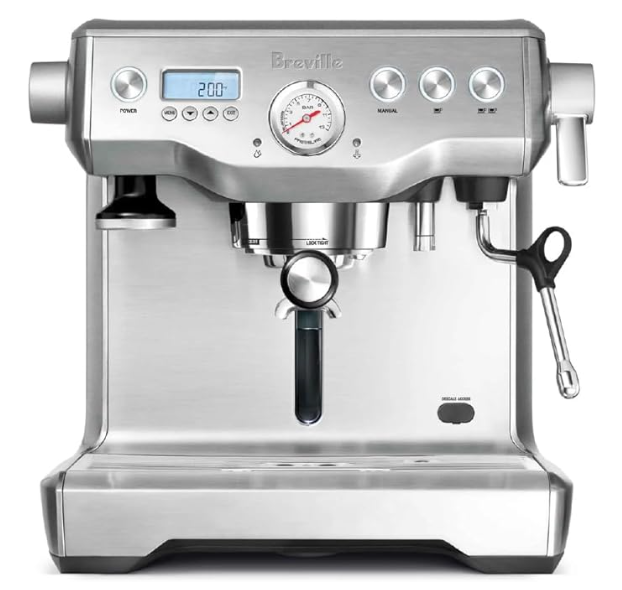
    Breville Dual Boiler

    The Breville Dual Boiler is a favorite among serious home baristas — and for good reason. Its dual boiler system allows you to pull shots and steam milk simultaneously while maintaining extremely stable temperatures.

    Why we love it:

    • Dual stainless steel boilers
    • PID temperature control
    • Commercial-style 58mm portafilter
    • Excellent value for its feature set

    This is an ideal choice if you love experimenting with extraction variables and want repeatable results shot after shot.

    breville dual boiler espresso machine for home baristas

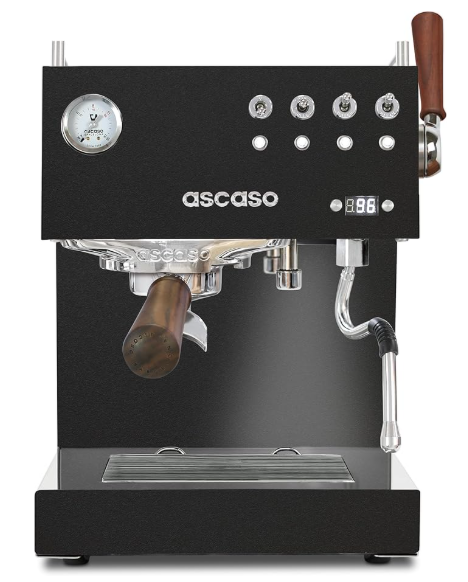
    Ascaso Steel Duo PID

    The Ascaso Steel Duo PID offers a sleek, contemporary take on home espresso machines, pairing thoughtful design with impressive performance. Its dual thermoblock system allows you to brew and steam at the same time while heating up significantly faster than traditional boiler machines.

    Standout features:

    • Dual thermoblock system for simultaneous brewing and steaming
    • PID temperature control for precise, consistent shots
    • Fast heat-up time compared to boiler-based machines
    • Compact, modern stainless steel design

    This machine is a great fit for coffee enthusiasts who want high-level performance, minimal wait time, and a clean, modern look on their counter. Available in black, stainless steel, and white.

    ascaso steel duo pid for home barsitas

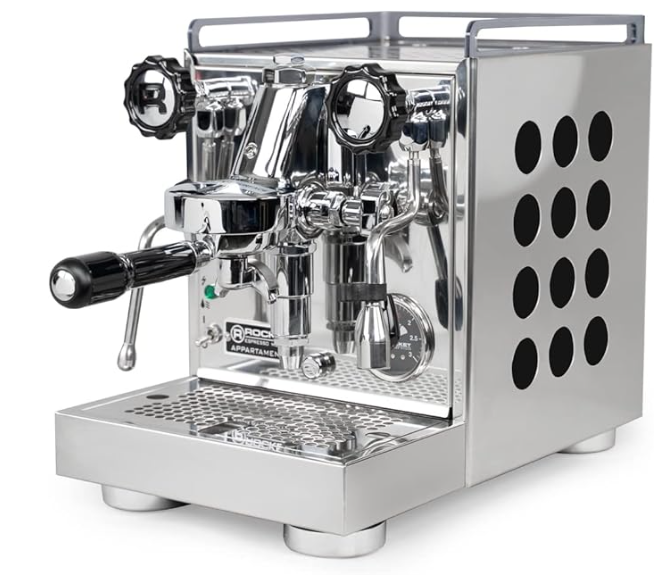
    Rocket Appartamento

    The Rocket Appartamento is compact, stunning, and incredibly capable. Designed for smaller kitchens without compromising performance, it’s often chosen by home baristas who want café presence on their counter.

    Why it stands out:

    • Hand-built in Italy
    • Heat exchanger system
    • Strong steam pressure
    • Iconic Rocket design

    It’s a machine that makes espresso and makes a statement.

    ROCKET APPARTAMENTO HOME BARISTA ESPRESSO MACHINE

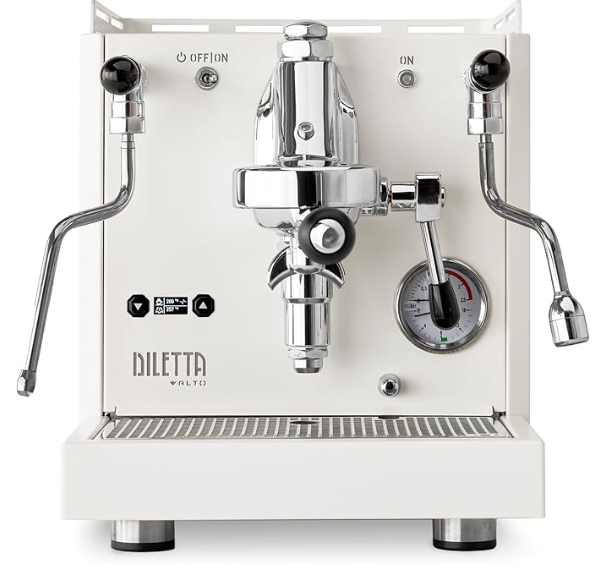
    Diletta Alto Espresso Machine

    The Diletta Alto Espresso Machine combines a dual boiler system, PID temperature control, shot timer, and adjustable OPV to give home baristas full control over their espresso experience. Its white finish adds a modern aesthetic to your kitchen while delivering café-quality shots.

    Top features:

    • Dual boiler system for simultaneous brewing and steaming
    • PID temperature control for precision
    • Shot timer for consistent extraction
    • Adjustable overpressure valve (OPV)
    • Elegant white design suitable for home counters

    This machine is perfect for coffee enthusiasts who want complete control, premium performance, and a visually appealing machine.

    DILETTA ALTO HOME ESPRESSO MACHINE

    Linea Micra

    The La Marzocco Linea Micra is a compact, high-end espresso machine designed to bring the reliability and quality of commercial machines into your home. With dual boilers and precise temperature control, it allows for simultaneous brewing and steaming, ideal for those who want full control over their espresso shots.

    Top features:

    • Dual boiler system for brewing and steaming at the same time
    • PID temperature control for precise, repeatable shots
    • Commercial-quality steam wand for silky milk
    • Compact, sleek design for home kitchens
    • Built with La Marzocco’s renowned reliability and craftsmanship

    The Linea Micra is perfect for enthusiasts who are ready to invest in top-tier performance and want a machine that will last for years while delivering café-quality espresso at home. However, it is a bit pricier than the others listed.


    Steps for Buying the Right Espresso Machine


    How to Choose the Best Espresso Machine for You

    Before clicking “add to cart,” ask yourself:

    • Am I willing to learn and dial in consistently?
    • How much control do I want over brewing variables?
    • Do I value aesthetics as much as performance?
    • Will this machine fit my space?

    There’s no single “best” espresso machine — only the one that fits your personal routine, space, and goals.


    Final Thoughts

    Leveling up your espresso machine is about more than better coffee — it’s about deepening your relationship with the craft. The machines on this list reward curiosity, patience, and passion, making them perfect companions for the next stage of your coffee journey.

    If you’re ready to invest in quality, learn your equipment, and savor every shot, any of these espresso machines will serve you beautifully.

    We’d love to see your home espresso machine set-up! Tag us on Instagram @the.coffee.collect!

    Happy brewing!

    -the coffee collect.

  • Steps for Buying the Right Espresso Machine

    Steps for Buying the Right Espresso Machine


    Buying an Espresso Machine That Actually Fits You

    Let’s be honest, buying an espresso machine can feel overwhelming.

    Between the endless specs, pressure bars, milk frothers, and boiler types, it’s easy to wonder if you’ll ever find the “right” one.

    Maybe you’ve scrolled through dozens of options only to feel more confused than when you started. I’ve been there, trust me.

    Or maybe you’ve already bought one that didn’t quite meet your expectations—too bulky, too slow, too complicated, or just not giving that café-level taste you were hoping for.

    We get it.

    Espresso machines aren’t one-size-fits-all, and choosing the right one shouldn’t feel like a gamble.

    Your espresso machine should match you—your lifestyle, your space, and your coffee goals.

    That’s why we’re breaking down the key steps to help you make an informed, confident decision. By understanding what you actually need (and what you don’t), you’ll not only save money, but you’ll set yourself up for the kind of daily coffee experience you’ll look forward to.

    coffee, espresso, caffeine, morning, machine, drink, flavor, aromatic, espresso, espresso, espresso, espresso, espresso, caffeine

    Step 1: Know What You’ll Be Demanding from Your Machine

    Before you even look at brands or models, ask yourself:

    • How often will I use it?
    • Do I mostly drink espresso, or do I love milk-based drinks like lattes and cappuccinos?
    • Do I want full control over the brewing process, or something more automatic?
    • How much counter space do I have?

    Your answers will shape everything else. Someone brewing two shots a day has very different needs than someone serving up a coffee for each person in the household every morning.

    The more you know about what you’ll demand from your machine, the better you can narrow down your options.


    Step 2: Understand Espresso Machine Types

    There are several main types of espresso machines, and each fits a different kind of user:

    • Manual machines: Great for coffee purists who enjoy total control. But they require skill, patience, and experimentation—every shot is a craft.
    • Semi-automatic machines: Perfect balance between control and convenience. You still grind, tamp, and start the shot, but the machine handles pressure and timing.
    • Automatic or super-automatic machines: Ideal for busy mornings. These do almost everything for you, from grinding beans to frothing milk.
    • Pod machines: Fast, clean, and consistent, but less customizable and more expensive per shot over time.

    Step 3: Think About Size and Design

    Counter space is precious, especially in small apartments or those itty bitty dorm rooms.

    Before you fall in love with a machine online, check the dimensions and consider where it will live in your kitchen.

    Compact models can still pack a punch, but they often have smaller water tanks or less powerful steam wands. Larger machines may handle multiple drinks at once but could dominate your countertop. Always balance aesthetic and functionality before you buy.


    Step 4: Learn About Boilers and Thermoblocks

    Boilers are the heart of any espresso machine. They control water temperature and steam pressure. There are a few types worth knowing:

    • Single boiler: Heats water for brewing and steaming, but not at the same time. This means that you cannot pull an espresso shot while steaming milk simultaneously. Affordable and compact, but slower if you make hot, milk-based drinks often.
    • Heat exchange (HX): Uses one boiler but allows you to brew and steam simultaneously by channeling water through a heat exchanger. A great middle ground.
    • Dual boiler: Has one dedicated boiler for brewing and another for steaming. Ideal for advanced home baristas who want precision and speed. These are usually larger and pricier.
    • Thermoblock systems: Instead of using a traditional boiler, these heat water on demand as it passes through a metal block. They’re efficient, compact, and heat up quickly—perfect for beginners or those short on space. However, they may struggle to maintain consistent temperature for back-to-back shots compared to dual boilers

    Step 5: Check Voltage and Power Requirements

    In the U.S., most home espresso machines are designed for 120 volts, which is standard for kitchen outlets. Higher-end, commercial-style machines may require 220 volts, which means special wiring or outlets.

    Always confirm before buying—nothing’s worse than unboxing your dream espresso machine only to realize it won’t plug in…


    The Best Burr Coffee Grinders


    Step 6: Consider the Features That Actually Matter

    It’s easy to get caught up in fancy terms and shiny buttons. Instead, focus on what will actually improve your daily coffee experience:

    • Built-in grinder: Convenient and space-saving. This is ideal if you will only be brewing espresso. However, if you like to freshly grind your coffee beans for different brewing methods like french press or cold brew, you may want to invest in a separate grinder that has more grind size settings.
    • PID (Proportional-Integral-Derivative) temperature control: A system that regulates water temperature very precisely, keeping it stable for consistent shots and preventing over- or under-extraction. Some machines have a PID while others do not; it is more common in higher-end and semi-automatic or dual-boiler machines. It is important if you value consistency, precision, and want more control over espresso quality, but less critical for casual or beginner use.
    • Steam wand quality: Essential if you love milk-based drinks. It allows you to create smooth microfoam for lattes and cappuccinos, which improves drink texture and flavor. There is a learning curve to using a steam wand, but with practice it becomes fun and rewarding once you start nailing the latte art 😉
    • Pressure bars: 9 bars is standard for proper espresso extraction. Don’t fall for marketing hype claiming 15 or 20 bars automatically means better coffee. Espresso machines rated 9, 15, or 20 bars can all make quality espresso, so this shouldn’t be a deciding factor.
    • Ease of cleaning: A huge factor for long-term happiness. Customer reviews often give honest remarks on the upkeep an espresso machine may require, so I recommend you check those out before making a purchase.

    Step 7: Balance Budget and Longevity

    Espresso machines can range from under $200 to way over $2,000. While higher price often means better build quality and features, it’s more important to find something that fits your current needs—and that you’ll actually use. A smaller, reliable beginner-friendly machine can be a better investment than an expensive one that collects dust.


    Step 8: Compare and Choose the Right Fit

    Now that you know what to look for, here are a few machines we recommend based on different needs (linked below for easy access):

    • Best for Everyday Home Use: Breville Barista Express — combines an integrated grinder, precise espresso extraction, and manual controls for an all-in-one, barista-style experience.
    • Best for Aspiring Baristas: Gaggia Classic Pro — excellent control and long-lasting quality.
    • Best for Advanced Home Baristas: Rancilio Silvia Pro or Ascaso Steel DUO Espresso Machine — both offer exceptional control and craftsmanship. The Rancilio Silvia Pro features dual boilers for powerful, simultaneous brewing and steaming, while the Ascaso Steel DUO offers PID temperature control, dual thermoblocks, and volumetric controls for precision brewing.

    Each of these machines fits a different kind of coffee lifestyle—what matters most is finding the one that fits yours. Make sure to explore the different features of a machine before purchasing.


    Final Thoughts

    Choosing the right espresso machine isn’t about finding the most expensive or popular one—it’s about understanding what you need from it. Once you identify your habits, preferences, and expectations, the right choice becomes much clearer.

    So, take a moment to think about what you’ll truly demand from your machine, and when you do finally bring it home, you’ll be ready to pull shots that fit your taste, your rhythm, and your everyday life.

    Reach out if you have any more advice, comments or concerns. We’d love to hear from you.

    Coffee creates community.

    -the coffee collect.